Damascus Chef's Knife Care: Washing, Honing and the Olive Wood Handle
Published 27 February 2026 · Updated 12 October 2026
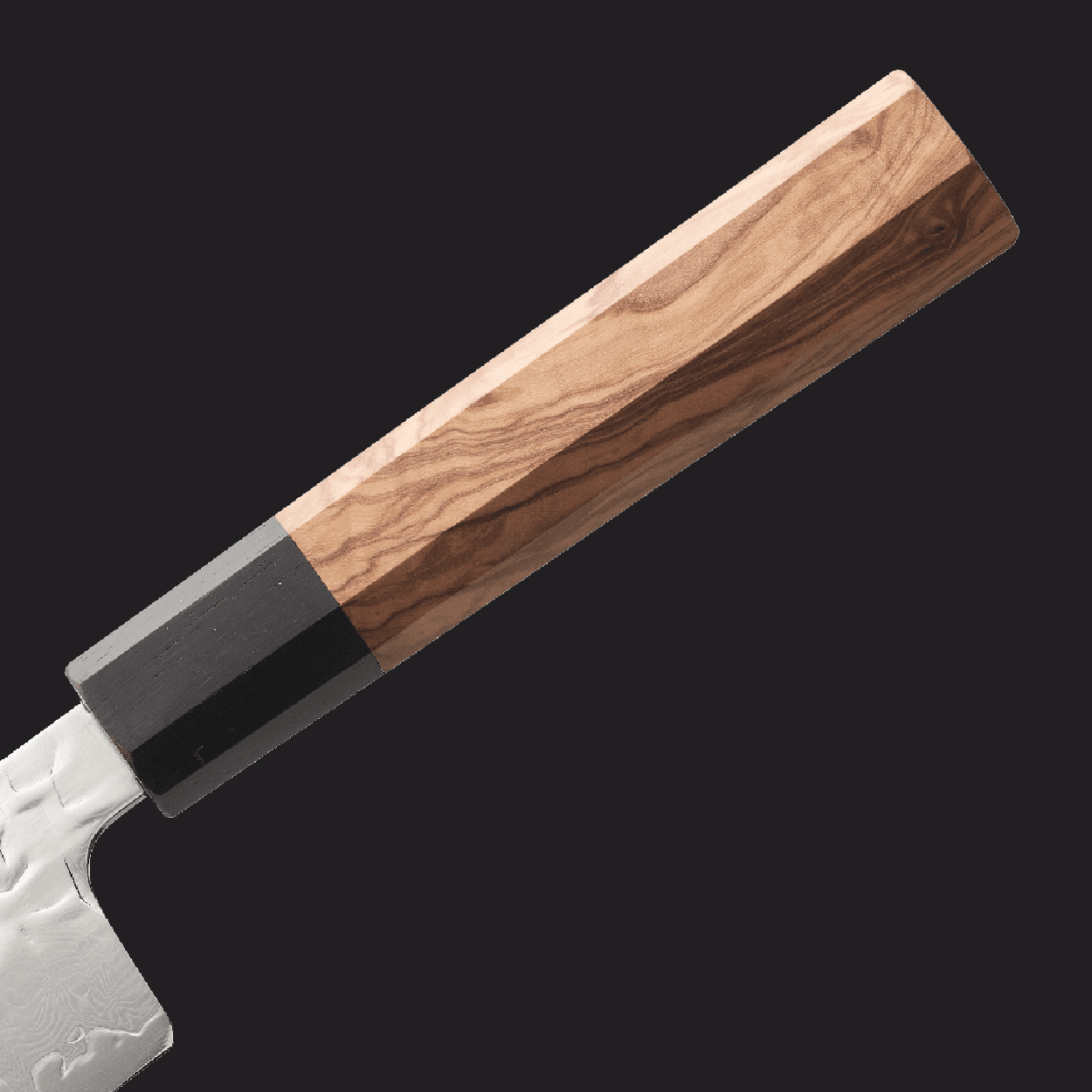
The SEIDO Cookware chef's knife is hand wash only. Wash it in warm water with washing-up liquid, dry it straight away, and hone it every 2–3 uses, as the insert that comes with the knife recommends. Oil the olive wood handle now and then, cut on wood or plastic, and store it where the edge cannot knock against anything.
This is the short care card for the knife itself: a VG10 steel core clad in Damascus stainless steel, a blade of about 22 cm (8.7 in) and an octagonal olive wood handle, covered by a 5-Year Limited Warranty. The wider routine for any kitchen knife, from chopping boards to sharpening methods, is in our knife care handbook.
How do you wash the SEIDO Cookware chef's knife?
By hand, every time: the insert asks you to hand wash this knife only. Wash it soon after use — straight away after acidic or salty foods such as lemon, tomato or a marinade — in warm water with a little washing-up liquid and a soft sponge. Keep the edge pointing away from you and wipe along the blade from heel to tip.
Never put it in the dishwasher or leave it to soak. A dishwasher knocks the blade against other items, which can dull or chip the edge, and long heat and moisture are hard on a wooden handle.
How do you dry it?
Straight away, blade and handle, with a clean, dry tea towel — and always before it goes into a knife block, onto a magnetic strip or into a blade guard. Stainless steel resists rust but is not rust-proof: water left to dry on the blade can leave spots, and a handle that stays damp can swell and crack over time.
How often should you hone it?
Every 2–3 uses, as the insert that comes with the knife recommends. Honing pushes the fine edge back into line after it has rolled with use, and a few light strokes per side are enough. Hold a honing steel upright with its tip on a board, draw the blade down the rod at roughly the angle of the edge itself, and alternate sides.
The SEIDO Cookware 20 cm Honing Steel is the natural partner to this knife. When honing no longer brings back a clean cut, the edge has worn and needs sharpening, on a whetstone or by a sharpening service.
How do you look after the olive wood handle?
Keep it dry, and oil it now and then. Rub a little food-safe oil or wax, such as mineral oil or beeswax, into the wood with a soft cloth, leave it to soak in, then wipe off the excess. Oiling keeps the wood from drying out; a handle that looks pale or feels dry is ready for it.
How should you cut with it and store it?
A few habits protect the edge between sharpenings:
- Cut on a wooden or plastic chopping board — never glass, stone or ceramic
- Move chopped food with the back of the blade, not the edge
- Keep it away from bones, frozen food and anything you would have to twist the blade through
- Clean the blade with a soft sponge, never a scourer or steel wool
- Store it in a knife block, on a magnetic strip or in a blade guard — never loose in a drawer
What does the warranty cover?
The SEIDO Cookware chef's knife carries a 5-Year Limited Warranty covering defects in materials and workmanship under normal home use, for five years from the date of purchase. Normal home use means following the care instructions that come with the knife, hand washing included.
An edge that dulls with use is normal wear, not a defect: that is what honing and sharpening are for. Damage from misuse or accident, such as a chip from cutting through bone or a drop onto a hard floor, is not covered. To claim, email customerservice@seidocookware.co.uk with your Amazon order number and photos of the issue.
Cutting this way is what our chef's knife is built for.
Frequently asked questions
- Can the SEIDO Cookware chef's knife go in the dishwasher?
- No. The insert that comes with the SEIDO Cookware chef's knife asks you to hand wash it only. Use warm water, washing-up liquid and a soft sponge, then dry the blade and the olive wood handle straight away. A dishwasher knocks the blade against other items and keeps a wooden handle hot and wet for a long time.
- What should I do before using the knife for the first time?
- Wash the SEIDO Cookware chef's knife by hand in warm water with a little washing-up liquid, rinse it and dry it straight away. Set up a safe place for it before its first use — a knife block, a magnetic strip or a blade guard — and a wooden or plastic chopping board to cut on.
- How do I know when the knife needs honing or sharpening?
- Hone the SEIDO Cookware chef's knife every 2–3 uses, as the insert recommends, rather than waiting for it to feel dull. If it still skids on a ripe tomato skin or tears instead of slicing after a few light strokes on a honing steel, the edge has worn and needs sharpening, on a whetstone or by a sharpening service.
- How do I oil the olive wood handle?
- Make sure the knife is clean and dry. Rub a little food-safe mineral oil or beeswax into the olive wood handle with a soft cloth, leave it to soak in, then wipe off the excess. Do it now and then, whenever the wood looks pale or feels dry; it keeps the handle from drying out.
- Can I use a scourer on the Damascus blade?
- No. Clean the blade of the SEIDO Cookware chef's knife with a soft sponge or cloth. Scourers, steel wool and abrasive cleaners scratch the finish and can dull the look of the layered Damascus pattern. For a stubborn mark, hold a cloth soaked in warm soapy water on the spot for a minute, then wipe along the blade with your fingers on the spine side.
- Does the warranty cover a dull or chipped edge?
- A dull edge is normal wear, so it is not covered: honing and sharpening restore it. A chip caused by misuse or accident, such as cutting through bone or dropping the knife, is not covered either. Defects in materials and workmanship are covered by the 5-Year Limited Warranty. If you are not sure which you have, email customerservice@seidocookware.co.uk with your Amazon order number and photos.
Browse all kitchen tools or keep reading: Honing Steel Care Guide · Serrated Peeler Care Guide · Damascus Chef's Knife vs Budget Knives: What Actually Differs.
SEIDO Damascus Stainless Steel Chef's Knife
See the chef's knife