
At a Glance
| Feature | Stainless Steel | Cast Iron |
|---|---|---|
| Weight (28cm) | ~1.5kg | ~4kg |
| Heat distribution | Even (5-ply base) | Uneven (hot spots) |
| Heat retention | Good | Excellent |
| Seasoning required | No | Yes |
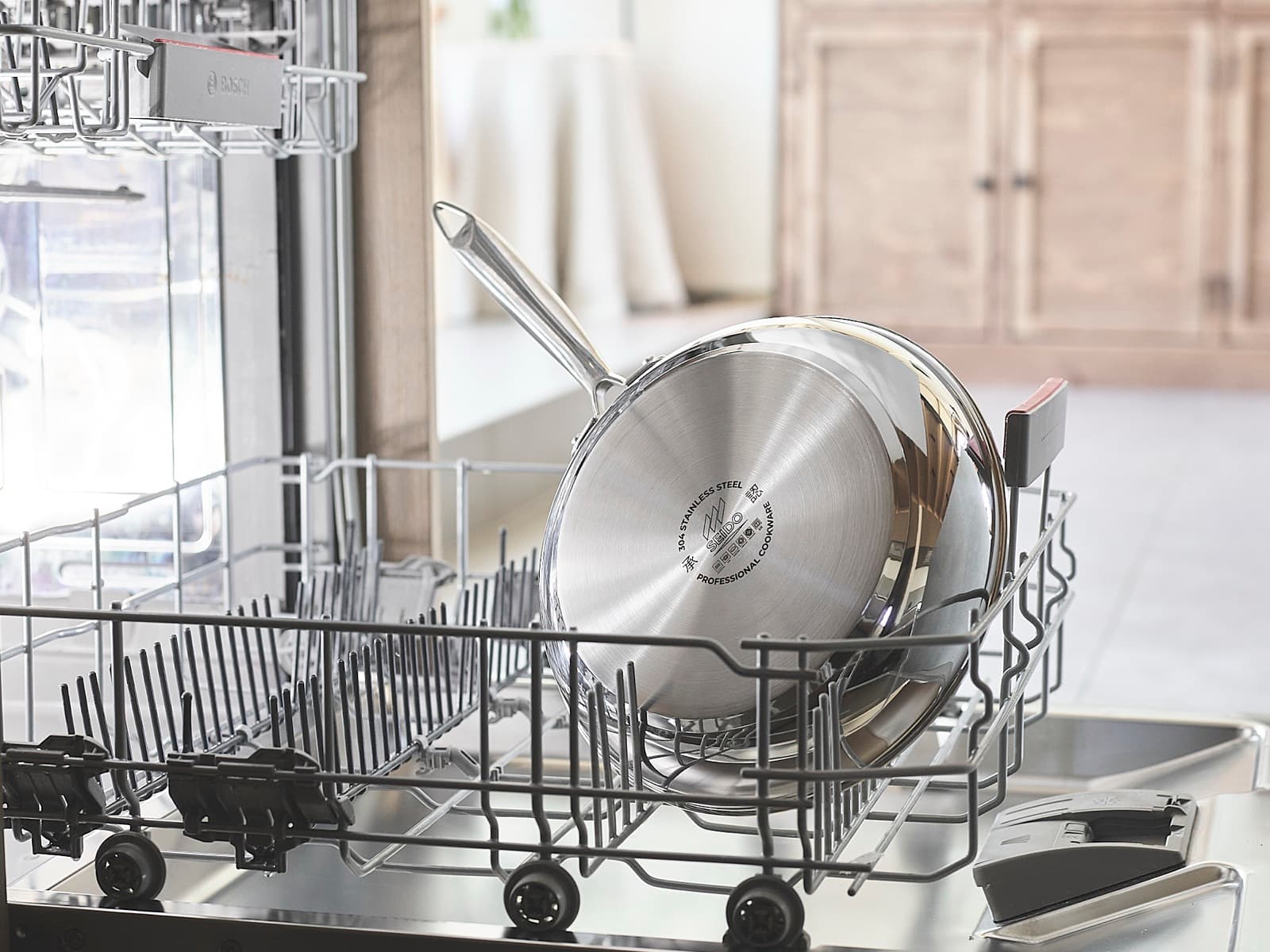
| Dishwasher safe | Yes | No |
| Acidic foods | No issues | Can damage seasoning |
| Induction compatible | Yes (with magnetic base) | Yes |
| One-handed use | Yes | Difficult |
| Maintenance | Low | High |
Overview
Stainless steel and cast iron are both excellent chemical-free cookware materials. They cook differently, maintain differently, and suit different styles. This guide helps you decide which belongs in your kitchen — or whether you need both.
Heat Distribution
Cast iron has exceptional heat retention but heats unevenly — the area over the burner is much hotter than the edges. Stainless steel with a multi-ply base (like SEIDO's ThermoCore 5-ply) distributes heat evenly across the entire surface, eliminating hot spots. Stainless steel also responds faster to temperature changes, which is important for sauces and delicate cooking.
Weight
A 28cm cast iron skillet weighs 3.5-4.5kg. A comparable stainless steel pan weighs 1.2-1.8kg. This difference affects daily usability: cast iron requires two-handed lifting and makes tossing difficult, while stainless steel allows comfortable one-handed use.
Maintenance
Cast iron needs seasoning (building polymerised oil layers), avoids soap, requires immediate drying, and needs re-oiling after each use. Damaged seasoning causes sticking and rust. Stainless steel needs no seasoning — wash with soap, use the dishwasher, use any utensils. Significantly less maintenance.
Reactivity
Cast iron reacts with acidic foods — tomato sauces, wine reductions, and citrus can strip seasoning and impart metallic flavour. Stainless steel is non-reactive and handles all foods without affecting flavour.
Versatility
Both work on gas, electric, and induction. Both are oven-safe. But only stainless steel is dishwasher safe. And only stainless steel handles acidic foods without issues. For varied, everyday cooking, stainless steel is more versatile.
The Verdict
Stainless steel is the better all-purpose daily pan — lighter, easier to maintain, non-reactive, and responsive. Cast iron is excellent for high-heat searing and baking. The ideal kitchen has both, but if you are choosing one, start with stainless steel.
Why Stainless Steel
Pros
- Significantly lighter and easier to handle
- Even heat distribution with no hot spots
- No seasoning or special maintenance required
- Non-reactive — cook any food without flavour transfer
- Fully dishwasher safe
Cons
- Less heat retention than cast iron
- Cannot match cast iron for campfire or outdoor cooking
- Higher initial cost than basic cast iron
Recommended Products
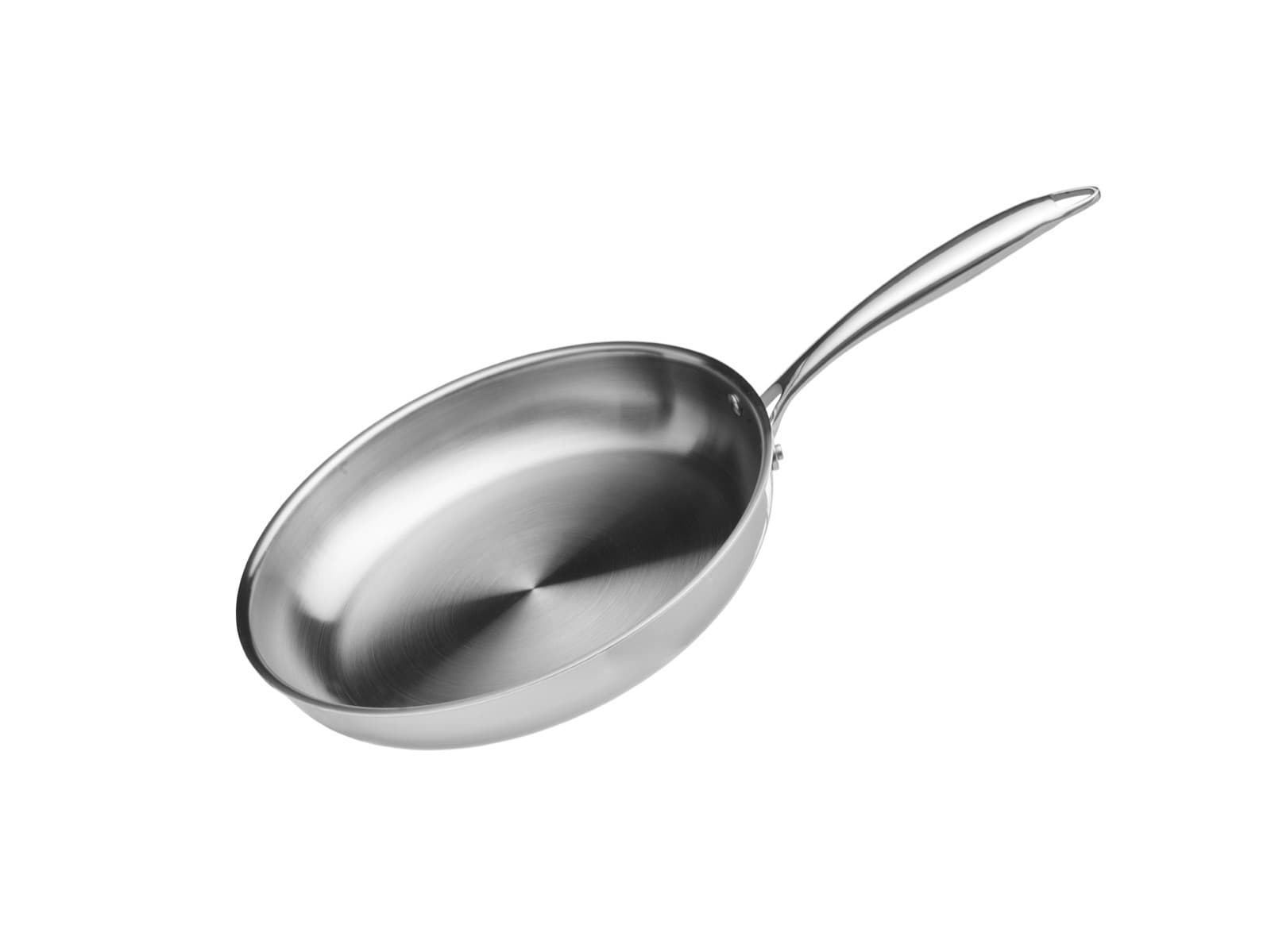
SEIDO Stainless Steel Frying Pan — 28cm
Large triply stainless steel frying pan with ThermoCore 5-ply base. Ideal for family-sized meals. Uncoated and non-toxic.
Buy NowFrequently Asked Questions
Can stainless steel sear as well as cast iron?+
Yes. With proper preheating, stainless steel achieves excellent sears. The even heat distribution across the cooking surface actually produces more consistent results than cast iron's hot-spot-prone surface.
Should I own both stainless steel and cast iron?+
If you enjoy cooking and have the storage space, yes. Use stainless steel for daily cooking and cast iron for weekend steaks, baking, and outdoor grilling. If choosing one, stainless steel is more versatile.
Is cast iron better for beginners?+
Cast iron is more forgiving of heat errors but requires learning seasoning and maintenance. Stainless steel requires learning preheat technique but is easier to maintain. Neither is significantly harder than the other.
Related Reading
Stainless Steel vs Cast Iron: Which Should You Choose?
Both are PFAS-free kitchen staples, but they cook very differently. Here is an honest comparison to help you decide which belongs in your kitchen.
5-Ply vs Tri-Ply Stainless Steel: What's the Difference?
Not all stainless steel cookware is created equal. Understand the difference between ply counts and why it matters for your cooking.