Stainless Steel or Cast Iron: Which Should You Buy First?
Published 10 August 2025 · Updated 12 October 2026
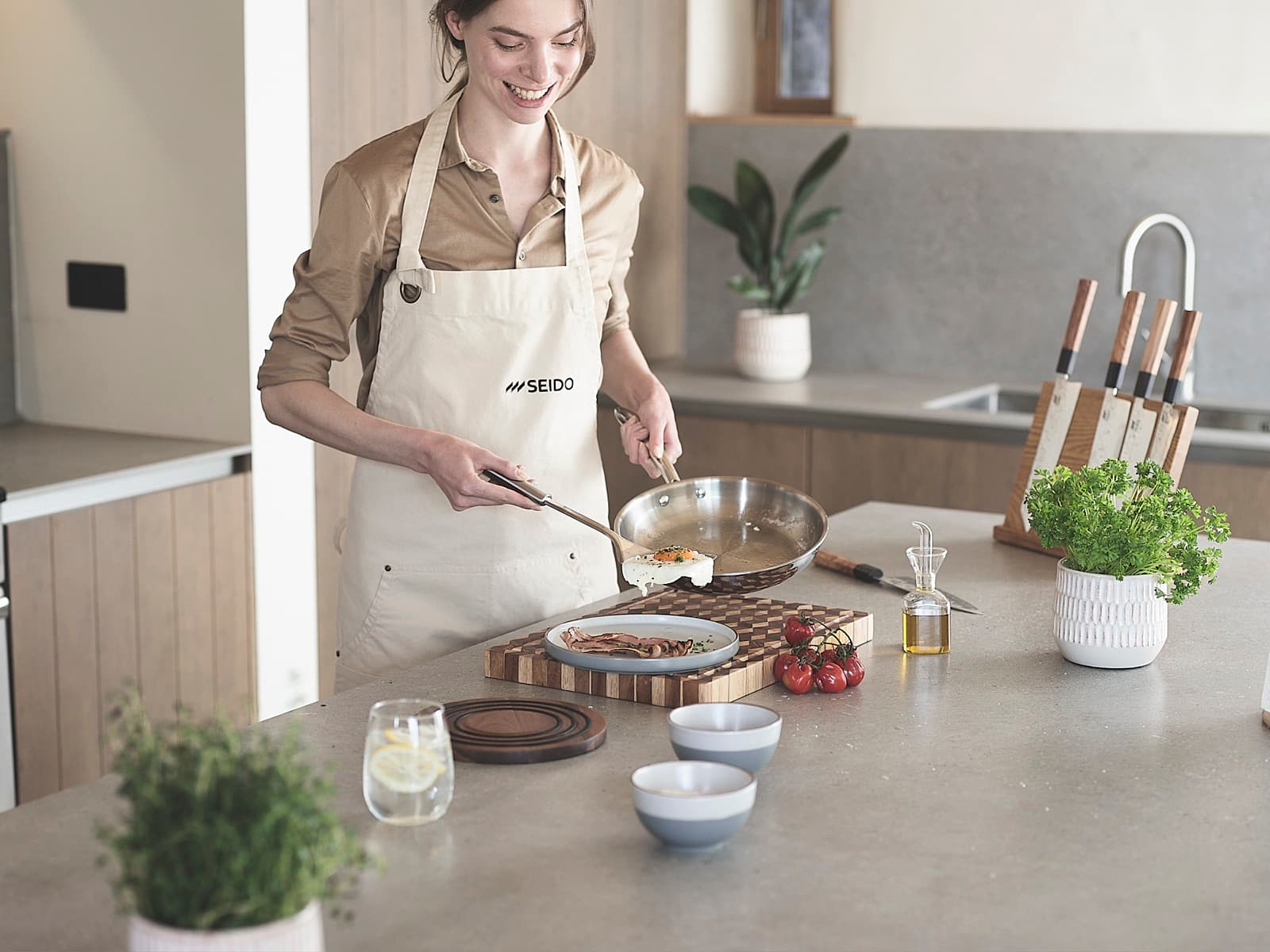
For most kitchens, buy a stainless steel frying pan first. It needs no seasoning, handles acidic sauces, cleans with ordinary washing-up liquid and covers most weeknight cooking. Buy cast iron first if you mostly sear thick cuts and bake in the pan. Many cooks end up owning both, because each covers the other's weak spots.
This is a buying guide rather than a material-by-material comparison: which pan to buy first for the way you cook, when cast iron should come first instead, what living with each pan is like, and how the two share the work once you own both.
Why is stainless steel the usual first pan?
Because it covers the most ground with the fewest rules. A stainless steel frying pan sears, sautés, fries eggs once you have the preheat right, and makes pan sauces from the browned fond left after searing. It is largely non-reactive with everyday cooking acids, so tomato sauces, wine and lemon are no problem, and there is no seasoning to build or protect.
It is also the easier pan to live with from day one. Wash it with hot water and washing-up liquid, soak anything stuck on, scrub it if you need to, dry it and put it away. A stainless steel pan is usually lighter than cast iron of the same size, so it is easy to lift, tip and carry to the sink.
When should cast iron come first?
Cast iron makes the better first pan for some cooks. Consider starting with it if:
- Most of your cooking is thick steaks, chops and burgers seared hard, where a heavy pan that holds plenty of heat keeps the surface hot when cold meat goes in.
- You often bake in the pan — frittatas, pan pizzas and other dishes that go into the oven in the pan they started in.
- You enjoy the routine of seasoning — drying, oiling and slowly building a slick surface — rather than seeing it as a chore.
- Weight does not bother you, and you have room to store a heavy pan.
What is each pan like to live with?
The difference shows up after dinner more than during it.
- Cast iron, after cooking: wash it by hand without soaking, dry it straight away over a low heat and wipe on a thin film of oil. It never goes in the dishwasher.
- Cast iron, over the months: the seasoning darkens and grows slicker with use; long acidic simmers and harsh scrubbing wear it back, and a rusty patch means scrubbing back to bare metal and re-seasoning.
- Stainless steel, after cooking: let it cool, wash it with washing-up liquid, soak anything stuck on, dry it and put it away.
- Stainless steel, over the months: there is no seasoning to keep up. High heat can leave a rainbow heat tint, which is cosmetic and usually lifts with a splash of white vinegar.
- Both: metal handles get hot, on the hob and especially in the oven, so keep an oven glove or a dry tea towel to hand.
Why do so many cooks end up owning both?
Because each pan is strongest where the other is weakest. Cast iron holds heat for long, hard sears and oven cooking, but it dislikes acid, soaking and the dishwasher. Stainless steel handles acid, scrubbing and quick changes of heat, but stores less heat than a heavy cast iron pan.
Owning both means you never have to push either pan into a job it does poorly. The cast iron pan is used for what it does well, so its seasoning keeps building; the stainless steel pan takes everything else.
How do the two pans share the work?
Once you own both, a simple rule of thumb by dish:
- Steak night: either pan sears well. Reach for stainless steel if you want a pan sauce from the fond, and cast iron for a thick cut you want to sear hard and finish in the oven.
- Tomato sauce, wine braises and anything with lemon or vinegar: stainless steel.
- Fried eggs: a well-seasoned cast iron pan, or stainless steel preheated until a drop of water beads and glides, with enough butter or oil.
- Weeknight sautés and stir-fries: stainless steel, which comes up to heat quickly and is easy to wash afterwards.
- Pan pizzas, frittatas and other dishes baked in the pan: cast iron, or stainless steel within its maker's oven limit.
What should you check before buying either pan?
A few checks save a disappointing purchase.
- Cast iron: pick it up. A pan you cannot lift comfortably when it is full of food is a pan you will avoid; a helper handle opposite the main one helps.
- Cast iron: check whether it comes pre-seasoned, and whether its base is smooth if you cook on a glass-topped hob.
- Stainless steel: check what the cooking surface is — 304 (18/8) is a common food-grade stainless steel — and how the pan is built; many bond an aluminium core between layers of steel to spread heat.
- Stainless steel: check that the maker states it works on your hob, especially induction, and whether a lid is included.
- Both: read what the warranty covers, what it excludes and for how long.
Where does a SEIDO frying pan fit in a two-pan kitchen?
SEIDO makes the stainless steel half: uncoated frying pans with a tri-ply clad body — a 304 (18/8) stainless steel cooking surface, an aluminium core and a 430 stainless steel exterior — made without intentionally added PFAS. Each comes with a matching stainless steel lid, works on gas, electric, ceramic and induction hobs, is oven-safe to 260°C (500°F) for up to 1 hour, and is backed by a 5-Year Limited Warranty.
As a first pan, the 24 cm (9.5 in) is the everyday size for one or two people. Cooking for a family, choose the 28 cm (11 in); the 20 cm (8 in) is the natural second pan for eggs and single portions.
Cooking this way is what our 24 cm frying pan is built for.
Frequently asked questions
- Should my first frying pan be stainless steel or cast iron?
- For most people, stainless steel. It needs no seasoning, handles acidic food, cleans with washing-up liquid and covers most everyday cooking. Start with cast iron instead if you mostly sear thick cuts, bake dishes in the pan and enjoy keeping a seasoned surface.
- Do I need both a cast iron and a stainless steel pan?
- You do not need both, but many keen cooks end up with both because they complement each other: cast iron for long, hard sears and oven dishes, stainless steel for pan sauces, acidic dishes and quick weeknight cooking. If you can only have one, choose the one that suits the dishes you cook most.
- Which is easier to look after, cast iron or stainless steel?
- Stainless steel. Wash it, dry it and put it away; there is no seasoning to protect. Cast iron needs drying straight away, a thin film of oil after washing, no soaking and no dishwasher, and occasional re-seasoning.
- Which pan should I use for tomato sauce if I own both?
- Use stainless steel. It is largely non-reactive with everyday cooking acids, so a long tomato simmer will not strip anything or taste metallic. In cast iron, a long acidic simmer can wear the seasoning and give the sauce a metallic taste.
- Which SEIDO frying pan should I buy first?
- The 24 cm (9.5 in) frying pan is the everyday size for one or two people and the one to choose if you are buying a single pan. If you regularly cook for four or more, start with the 28 cm (11 in); the 20 cm (8 in) suits eggs and single portions as a second pan. All three have a tri-ply clad body and a 5-Year Limited Warranty.
Browse all stainless steel frying pans or keep reading: Can You Cook Acidic Foods in Stainless Steel? · Can You Put a Stainless Steel Pan in the Oven? · How Hot Should a Stainless Steel Pan Be?.
SEIDO 24 cm Stainless Steel Frying Pan
See the 24 cm frying pan