How to Sear Steak in a Stainless Steel Frying Pan
Published 12 October 2026
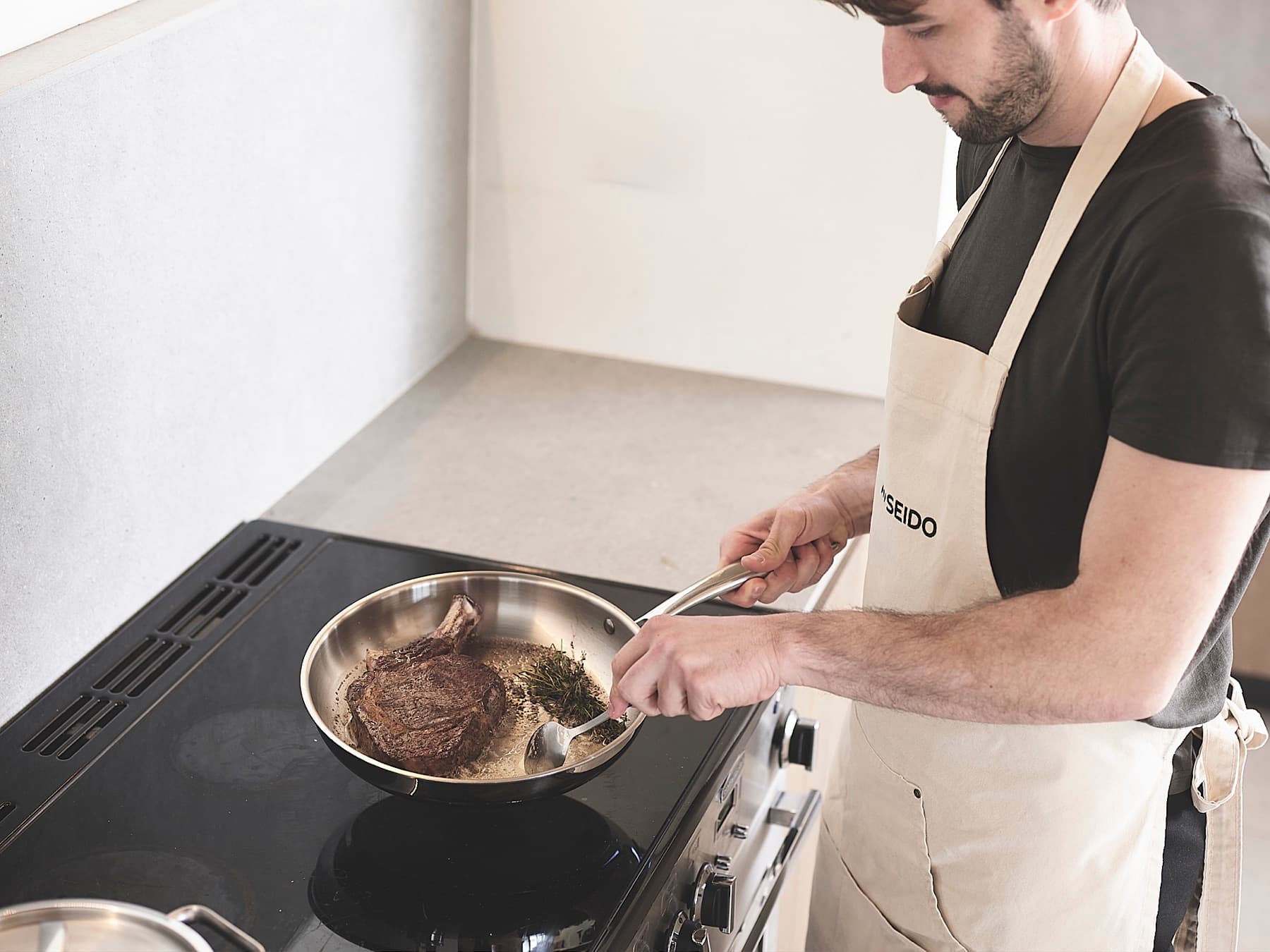
To sear steak in a stainless steel frying pan, pat the steak dry and salt it, then preheat the empty pan over medium-high heat until a drop of water beads and glides. Add a thin film of high smoke point oil, lay the steak in, and leave it alone until the crust releases. Turn it, then let it rest.
Every step serves one goal: a dry steak meeting a hot, oiled steel surface. Moisture has to boil off before browning can start, and an uncoated pan lets the meat make the direct contact a crust needs. The browned bits it leaves behind become the base of a pan sauce.
How do you sear a steak in a stainless steel frying pan, step by step?
This method suits steaks about 2.5 cm (1 in) thick or more, such as ribeye, sirloin or rump. Thinner steaks can overcook in the middle before the outside browns, so give them less time per side.
An instant-read thermometer takes the guessing out of doneness. Many cooks take a steak off the heat at 54 to 57°C (130 to 135°F) for medium-rare. The temperature inside keeps rising by a few degrees after the steak leaves the pan, so take it off slightly early. The steps:
- Dry the steak. Pat every surface with kitchen roll. Water on the meat has to boil away before browning can begin.
- Salt at the right time. Salt right before the steak goes in, or at least 40 minutes ahead. Salt draws moisture to the surface within minutes, and it takes time for that brine to be reabsorbed.
- Preheat the empty pan. Give it two to three minutes over a medium to medium-high heat, then flick in a few drops of water. When they bead up and glide instead of spreading and hissing, the pan is ready.
- Add oil. Wipe out the water, add a thin film of an oil with a high smoke point, and wait for it to shimmer.
- Lay the steak in, away from you, and leave it. It will grip the steel at first. Once the crust forms, it releases on its own.
- Turn and baste. Turn the steak when it lifts cleanly. For extra flavour, lower the heat, add butter, garlic and thyme, tilt the pan and spoon the foaming butter over the top.
- Rest. Move the steak to a board or rack for about five minutes before slicing.
Why does an uncoated stainless steel pan brown a steak?
The brown crust on a seared steak comes from the Maillard reaction. Amino acids and sugars in the meat react under heat and form hundreds of new flavour and aroma compounds. The reaction runs slowly at low temperatures and speeds up sharply once the surface climbs well past water's boiling point of 100°C (212°F).
That is why dryness and preheating matter so much. While the surface is wet, its temperature is held near 100°C (212°F) by the evaporating water, so the steak steams instead of browning. A dry steak on a hot pan skips that stage and starts browning almost at once.
Bare steel adds one more ingredient: direct contact. With no coating on the cooking surface, the meat presses straight against hot metal, and some of its proteins and sugars briefly bond to it. Those stuck, browned bits are called fond. As the crust sets, the steak lets go and the fond stays behind in the pan.
Construction affects how evenly that heat arrives. Stainless steel on its own spreads heat slowly, so many stainless steel pans bond the steel around a more conductive metal such as aluminium. This kind of construction is often called tri-ply or clad cookware. Whatever the pan, a full preheat stores heat in the metal, so the surface doesn't collapse the moment a cold steak lands on it.
What oil should you use to sear steak?
Choose an oil with a published smoke point of roughly 205°C (400°F) or higher. Refined rapeseed, grapeseed, groundnut and avocado oils are common choices. Published smoke points vary by source and by how refined the oil is, so treat any single figure as a guide rather than a guarantee.
Whole butter starts to smoke at roughly 150 to 175°C (300 to 350°F), because its milk solids brown and burn quickly. That makes it a poor choice for the initial sear and a good one for basting once the heat is lowered. Clarified butter and ghee have had those milk solids removed and tolerate more heat.
You need only a thin film of oil. Too much fat pools around the steak and fries the edges unevenly. If the oil smokes hard before the steak goes in, take the pan off the heat for a moment.
What size frying pan do you need for one steak or two?
Frying pans are measured across the top rim, and the flat cooking surface is smaller than that number. Pick a pan where the steak lies flat with open space around it.
For one steak, a 24 cm (9.5 in) frying pan is a comfortable fit for most cuts. A 20 cm (8 in) pan works for a single small steak. For two steaks at once, a 28 cm (11 in) pan gives them room. If two steaks touch or fill the pan edge to edge, sear them one at a time. Our frying pan size guide covers the other everyday jobs each size handles.
How do you make a pan sauce from the fond?
While the steak rests, the fond left in the pan is ready to become a sauce. Pour off most of the fat, leaving about a tablespoon (15 ml). Over a medium heat, soften a chopped shallot for a minute.
Then deglaze. Add a splash of stock, wine or even water, and scrape the bottom with a wooden spoon. The liquid loosens the fond and dissolves it into the sauce. Let it reduce until it coats the spoon, then turn off the heat and swirl in a small piece of cold butter. Pour in any juices from the resting board and season to taste.
Stainless steel resists corrosion, so a brief simmer with wine or another acidic liquid is a routine use for it.
What are the most common mistakes when searing steak?
Most disappointing sears come from a short list of causes, and each one has a simple fix:
- A cold pan. If the water drops spread and hiss, keep heating. A steak added too early sticks and steams.
- A wet steak. Surface moisture must boil off before browning starts. Pat it dry every time.
- Moving it too soon. Pulling at the steak before the crust forms tears it away from the pan. Wait for the release.
- Crowding the pan. Too much meat drops the surface temperature and traps steam. Leave space, or cook in batches.
- The wrong fat. Low smoke point fats burn during the sear. Save butter for basting.
- Cutting straight away. Slicing the moment it leaves the pan lets more juice run onto the board. Give it a short rest.
What is the best pan for searing steak?
Any heavy, uncoated metal pan that can be fully preheated will sear a steak well. Stainless steel, cast iron and carbon steel all qualify. Stainless steel needs no seasoning, and its bright surface lets you see the fond build and judge when it is close to burning. Non-stick pans are made to resist exactly the contact that builds fond, and their coatings carry the maker's heat limits.
SEIDO frying pans have an uncoated 304 (18/8) stainless steel cooking surface. They come in 20 cm (8 in), 24 cm (9.5 in) and 28 cm (11 in), each sold with a lid, and each is oven-safe to 260°C (500°F) for up to 1 hour, lid off. They carry a 5-Year Limited Warranty.
Cooking this way is what our 28 cm frying pan is built for.
Frequently asked questions
- Can you finish a steak in the oven after searing it?
- Yes, if the pan is oven-safe. Sear both sides on the hob, then move the pan to the oven to finish thicker cuts through. Any metal handle is hot after time in the oven, so grip it with a dry tea towel or oven glove. SEIDO frying pans are oven-safe to 260°C (500°F) for up to 1 hour, lid off, so leave the lid out.
- Why does my steak stick to the stainless steel pan?
- A steak sticks when the pan isn't hot enough, the meat is wet, or it's moved before the crust forms. On bare steel, proteins at the meat's surface bond briefly to the metal, then let go as the crust dries and firms. Preheat until water drops bead and glide, add oil, dry the steak and wait for that release.
- How long should you sear a steak on each side?
- For a steak about 2.5 cm (1 in) thick over a medium-high heat, three to four minutes per side is a common starting point for medium-rare. Thickness, the cut and your hob all change the timing. An instant-read thermometer is the reliable check, so go by temperature rather than the clock.
- Should you sear steak with butter or oil?
- Start with oil and finish with butter. An oil with a smoke point of roughly 205°C (400°F) or higher handles the initial sear. Whole butter starts to smoke at roughly 150 to 175°C (300 to 350°F), so add it after turning the steak, with the heat lowered, and spoon it over to baste.
- How do you clean a stainless steel pan after searing steak?
- Deglaze first: pouring water or stock into the warm pan and scraping lifts most of the fond. Once the pan has cooled, wash it with hot water, washing-up liquid and a non-scratch scourer. For stubborn browned spots, a paste of bicarbonate of soda and water, or a cleaner made for stainless steel, usually removes them.
Browse all stainless steel frying pans or keep reading: Can You Cook Acidic Foods in Stainless Steel? · Can You Put a Stainless Steel Pan in the Oven? · How Hot Should a Stainless Steel Pan Be?.