
At a Glance
| Feature | Stainless Steel | Glass |
|---|---|---|
| Weight (800ml) | ~200g | ~450g |
| Shatterproof | Yes | No (can crack) |
| Microwave safe | No | Yes |
| See-through | No | Yes |
| Oven safe | Yes (250°C) | Yes (varies) |
| Freezer safe | Yes (-40°C) | Yes (risk of cracking) |
| Dishwasher safe | Yes | Yes |
| Leak resistance | Excellent (quad-lock) | Good (snap lids degrade) |
| Stain resistance | Excellent | Excellent |
| Lifespan | 20+ years | 5-10 years |
Overview
Glass and stainless steel are both excellent alternatives to plastic food containers. Both are chemical-free, durable, and sustainable. This guide compares them on the factors that matter most for daily use — weight, portability, durability, and versatility.
Weight and Portability
Glass containers are significantly heavier than stainless steel. An 800ml glass container weighs approximately 450g, while a comparable stainless steel container weighs around 200g. For packed lunches carried in a bag, this weight difference adds up quickly — especially with multiple containers.
Durability
Glass is shatterproof when tempered, but it can still crack or chip from impacts. A dropped glass container on a hard floor is a genuine hazard. Stainless steel is virtually indestructible — drops, dents, and impacts do not compromise the container or create safety risks.
Microwave and Visibility
Glass containers are microwave safe and transparent, making it easy to see contents and reheat without transferring. Stainless steel cannot be microwaved and is opaque. If microwave convenience is a priority, glass has a genuine advantage.
Leak Resistance
Both materials can be made leakproof with silicone-sealed lids. However, glass lids with snap closures can lose their seal over time as the plastic/silicone components degrade. Stainless steel containers with quad-lock mechanisms maintain their seal longer.
Staining and Odour
Both materials resist staining and odour absorption far better than plastic. Glass has a slight edge for staining resistance with turmeric-heavy foods, while stainless steel performs equally well in nearly all cases.
The Verdict
For portability and durability, stainless steel wins convincingly — lighter, shatterproof, and more suitable for packed lunches. Glass is the better choice for home food storage where weight is irrelevant and microwave access matters. For work lunches and on-the-go use, stainless steel is the practical choice.
Why Stainless Steel
Pros
- Half the weight of glass — ideal for packed lunches
- Completely shatterproof — safe around children
- Virtually indestructible — lasts 20+ years
- Superior leak resistance with quad-lock lids
- Oven and freezer safe without cracking risk
Cons
- Cannot be microwaved — transfer to a microwave-safe dish
- Opaque — cannot see contents without opening
Recommended Products
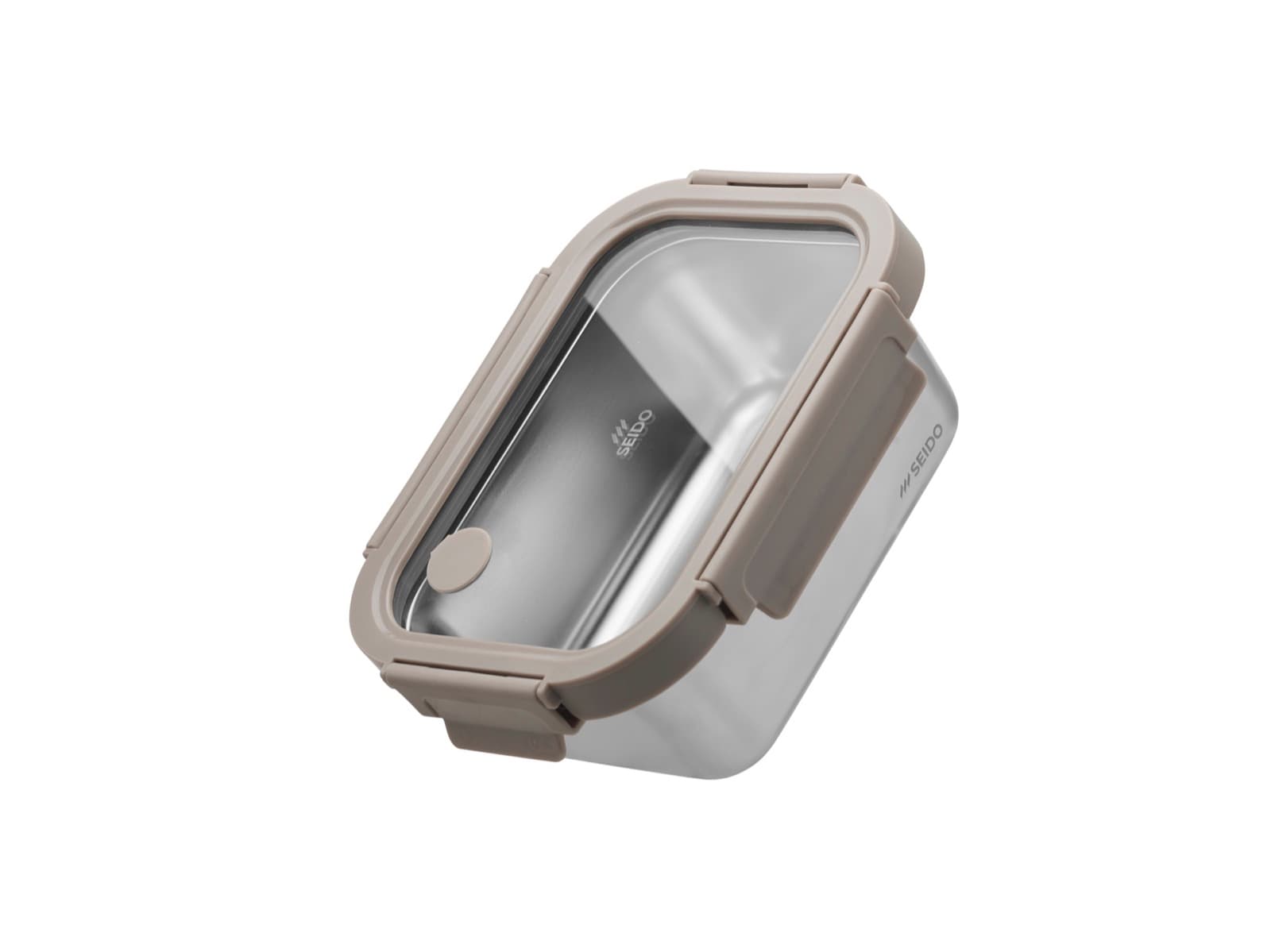
SEIDO Stainless Steel Lunch Box — 3 × 800ml
Leakproof stainless steel meal prep containers with quad-lock glass lids. Microwave, oven, freezer and dishwasher safe. 100% chemical free.
Buy NowFrequently Asked Questions
Is glass or stainless steel better for meal prep?+
For home meal prep and fridge storage, glass is convenient because you can see the contents and microwave directly. For transporting meals to work, stainless steel is lighter, safer, and more durable.
Can I freeze food in stainless steel containers?+
Yes. Stainless steel is freezer safe down to -40°C with no risk of cracking. Leave a small gap at the top for liquid expansion.
Related Reading
Stainless Steel Food Storage: The Complete Safety Guide
Is stainless steel safe for food storage? How does it compare to plastic, glass, and silicone? Everything you need to know about safe, chemical-free food storage.
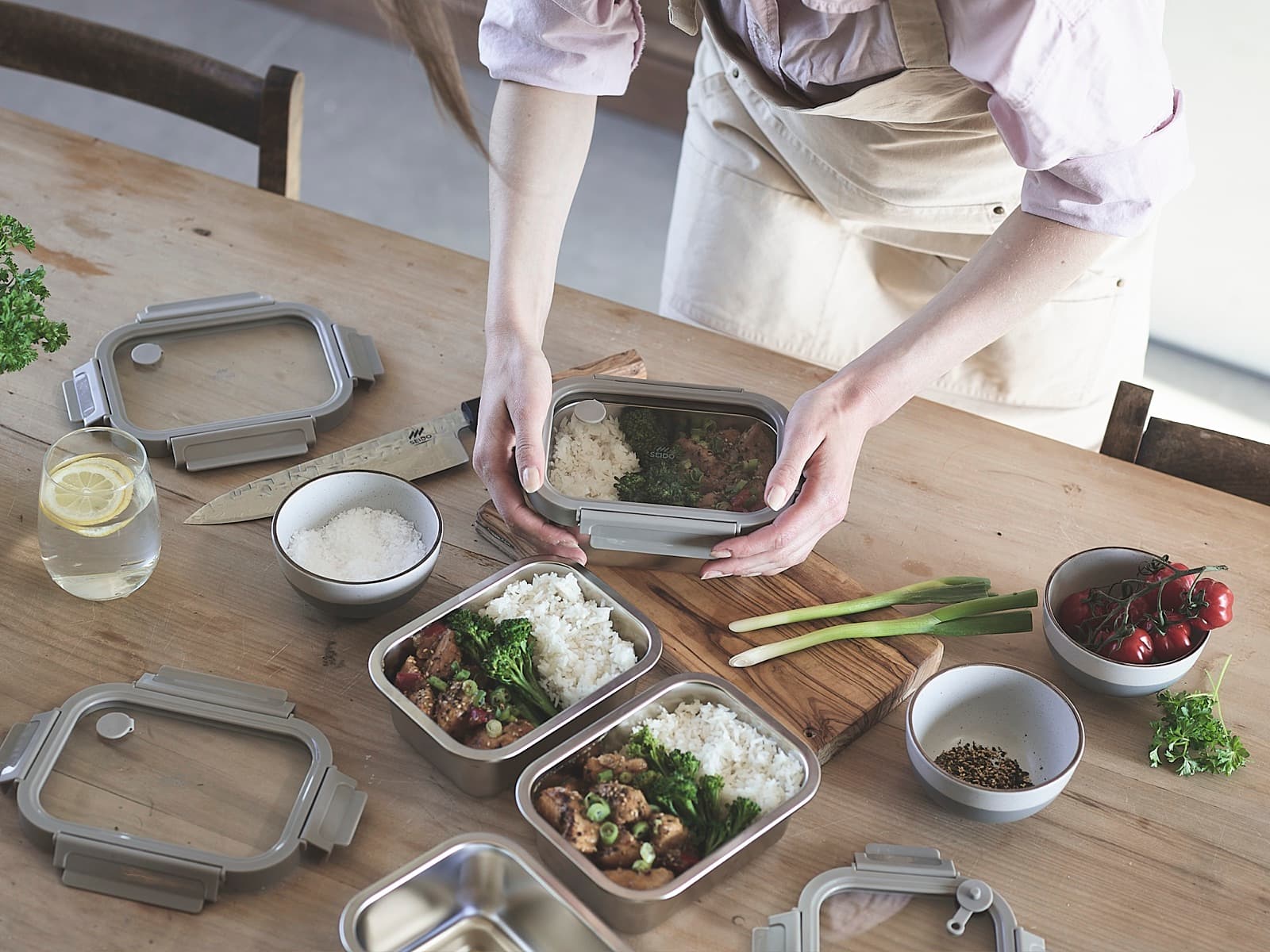
Meal Prep with Stainless Steel: The Plastic-Free Guide
Ditch the plastic containers and switch to stainless steel for healthier, more sustainable meal prep. Here is everything you need to get started.