Stainless Steel Food Storage: How to Chill, Freeze, Reheat and Clean Safely
Published 25 October 2025 · Updated 12 October 2026
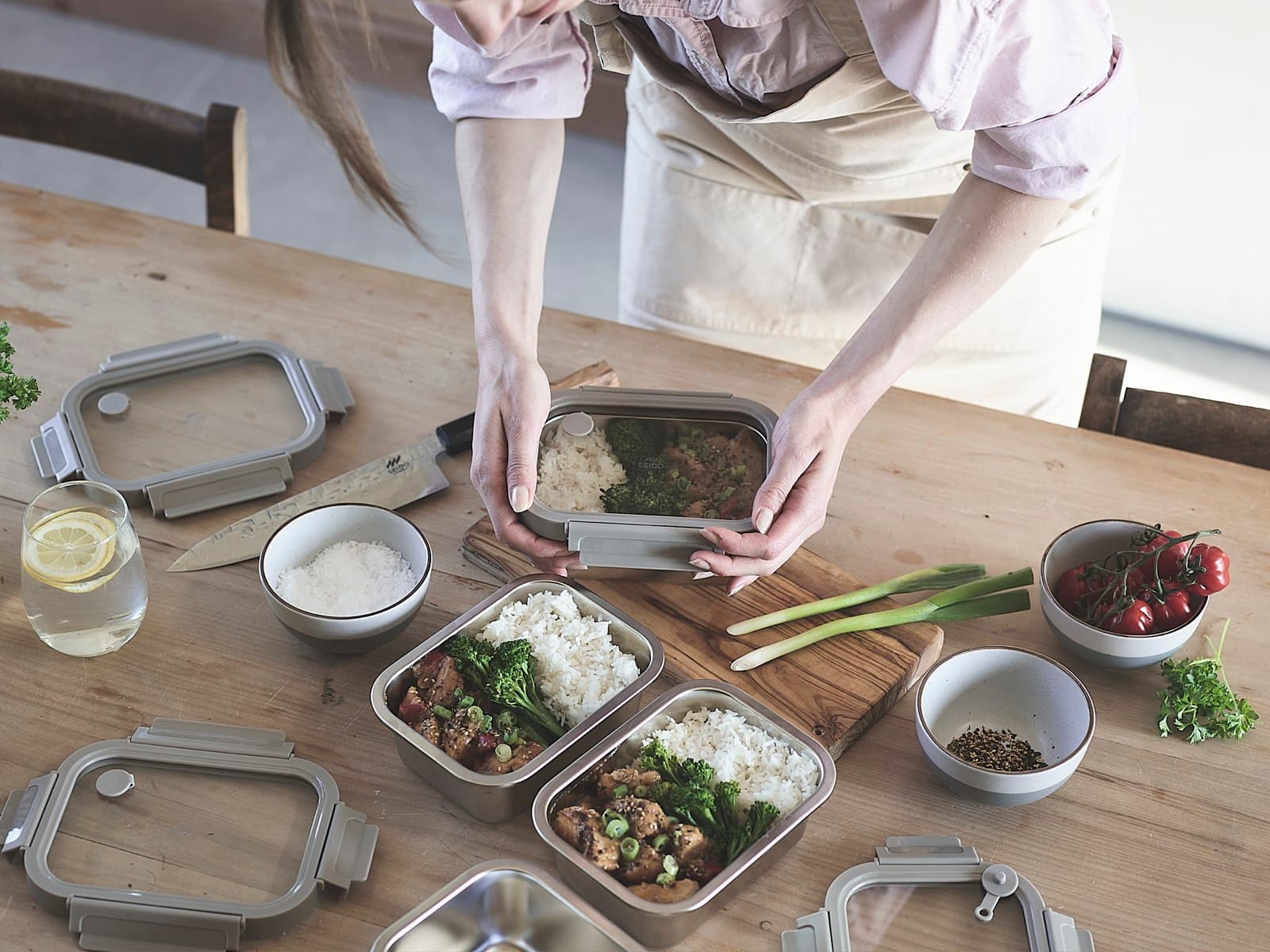
Stainless steel is well suited to storing food: 304 (18/8) is the standard food-contact grade, it is non-porous, and it handles fridge and freezer temperatures without cracking. Safe storage still depends on habits, not the container: cool food quickly, eat fridge leftovers within 48 hours, freeze the rest, and reheat once until steaming hot.
The container doesn't make food keep any longer. The time limits in this guide come from the Food Standards Agency (FSA) and apply whatever the container is made of. What stainless steel changes is the practical side: it resists stains and smells, copes with the freezer, and washes clean.
Is stainless steel a good material for storing food?
304 (18/8) stainless steel is the standard food-contact grade of stainless steel, used in commercial kitchens, food processing equipment and everyday cutlery. The numbers describe its make-up: roughly 18% chromium and 8% nickel, alloyed with iron.
The chromium is what keeps it stainless. It reacts with oxygen to form a very thin, invisible layer of chromium oxide that shields the iron underneath and re-forms on its own when the surface is scratched. That layer is why stainless steel doesn't rust in ordinary use.
Steel is also non-porous. Tomato sauce, curry and garlic don't soak into it, so a stainless steel container is less likely than many plastic ones to keep a stain or a smell after washing.
How long does food keep in the fridge?
The FSA advises cooling cooked food and putting it in the fridge or freezer within one to two hours, and eating leftovers kept in the fridge within 48 hours. Your fridge should be between 0 and 5°C.
Rice is the exception to know about. The FSA's advice is to cool cooked rice as quickly as possible, ideally within an hour, keep it in the fridge for no more than a day, and never reheat it more than once.
Opened tins are another. The FSA says not to store food in an opened tin: empty what you don't use into a bowl or another container and put it in the fridge. A stainless steel container with a lid does that job well.
- Cool cooked food quickly and get it into the fridge or freezer within one to two hours.
- Split big batches into individual containers: small, shallow portions cool faster than one deep pan.
- Eat fridge leftovers within 48 hours, and cooked rice within a day.
- Keep the fridge between 0 and 5°C.
Can you freeze food in stainless steel containers?
Yes. Household freezer temperatures are well within what stainless steel tolerates. It doesn't turn brittle at -18°C (0°F) the way some plastics can, and it won't crack the way glass can when it meets a sudden change in temperature.
Leave headspace for anything wet. Water expands by about 9% as it turns to ice, so soups, stocks and thin sauces need about 2.5 cm (1 in) below the rim, and stews and thick sauces about 1 cm (1/2 in). Freeze containers upright and level until the contents are solid.
The FSA advises freezing leftovers and home-made food as soon as possible, defrosting it in the fridge, or in the microwave on the defrost setting just before you reheat it, and eating it within 24 hours once it has defrosted. Frozen food slowly loses quality over the months, so label each container with what's inside and the date, and use the oldest first.
Is it safe to reheat food in a storage container?
It depends on what the container is made of and what its maker says. Use only containers marked as suitable for the microwave, and follow the conditions that come with them.
With plastic, heat, fatty food and long heating times all increase how much material moves from the container into the food, and worn or scratched plastic adds to it. Transferring food to a glass or ceramic dish marked for microwave use avoids the question.
Metal is different again. Microwaves reflect off metal rather than passing through it, so an ordinary steel container heats food slowly and unevenly, and thin edges can spark. A stainless steel container should only go in a microwave if its maker designed and tested it for that, and never empty.
Whatever the container, the FSA's rule for leftovers is the same: reheat until steaming hot all the way through, and reheat only once.
Can you store acidic food in stainless steel?
Storing food is different from cooking it. The food is cold, which slows chemical reactions, but it can sit against the steel for days rather than minutes. Leftovers such as chilli, tomato pasta or a lemony grain salad are generally fine in a stainless steel container for the 48 hours fridge leftovers should be kept.
For longer storage of strongly acidic or very salty foods, such as pickles, citrus marinades or vinegar dressings kept for weeks, glass is the more cautious choice. Salt and acid together are harder on the steel's protective layer than either one alone, and time adds to the effect.
In the freezer, chemical reactions slow down sharply and 304 steel resists corrosion from everyday foods, so tomato sauces and citrus-based dishes freeze well in it. Wash the container once it's empty rather than leaving residue to dry on.
Does the lid need different care from the container?
Yes. A steel container and its lid are often made of different materials, and they behave differently. Treat the lid by its own materials and its maker's instructions, not the container's.
Silicone gaskets generally stay flexible at freezer temperatures. Polypropylene, a common plastic for lid frames, gets stiffer and more brittle as it gets colder, so a frozen lid is more likely to crack if it's dropped or forced. Glass can crack under a sudden change in temperature, so don't run a frozen glass lid under hot water, or a hot one under cold water.
Close the lid only after the food has cooled. And never put a lid with a polypropylene frame in the oven: polypropylene softens at oven temperatures.
How do you clean stainless steel food containers?
Empty and rinse each container soon after use, then wash it in warm water with washing-up liquid and a soft sponge or brush. Dried-on sauce and starch take far more scrubbing than fresh residue.
For a lingering smell, rub a paste of bicarbonate of soda and a little water over the steel, leave it for about 15 minutes, then rinse and dry. If the smell is in the silicone gasket, soak and dry the gasket separately.
- Wash the lid and the container separately, so water reaches the gasket channel.
- Use a soft sponge, a nylon brush or a non-scratch pad, not steel wool, which leaves iron particles that can cause rust spots.
- Keep bleach away from stainless steel: chlorine bleach is a source of chlorides, which can break down the protective layer and cause pitting.
- Rinse off salty residue promptly, and never leave steel sitting wet.
- Dry every part fully, then store containers with the lid off or resting loosely on top, so moisture isn't sealed in.
Storing food in SEIDO lunch boxes
SEIDO Prep Series lunch boxes come as a 3-pack of 800 ml (27 oz) containers in 304 (18/8) food-grade stainless steel, each with a glass lid in a polypropylene frame with a silicone gasket. The container is lab-tested for fridge and freezer use; that test covered the empty container, without its lid. It is microwave-safe by design with the lid off: lab-tested in a microwave of up to 1000 W, and never to be heated empty. It is dishwasher safe, hand wash recommended, and, without its lid, lab-tested for the oven; the lid never goes in an oven. Pack sauces and soups in a separate jar rather than relying on the lid to hold liquid. Each set carries a 5-Year Limited Warranty (lid parts: 1 year). Buy now on Amazon.
Packing this way is what our lunch box 3-pack is built for.
Frequently asked questions
- Is stainless steel safe for food storage?
- 304 (18/8) stainless steel is the standard food-contact grade of stainless steel, used in commercial kitchens and food processing equipment. It is non-porous and handles fridge and freezer temperatures without cracking. It doesn't make food keep longer, though: follow the Food Standards Agency's timings, such as eating fridge leftovers within 48 hours.
- How long can leftovers stay in a stainless steel container in the fridge?
- The same as in any other container. The Food Standards Agency advises eating leftovers kept in the fridge within 48 hours, and cooked rice within a day. If you won't eat them in time, freeze them as soon as possible.
- Can you put warm food in a stainless steel container?
- You can portion warm food into one, and steel conducts heat far better than plastic, so the food cools faster. Let it cool before closing the lid or putting it in the freezer, and get it into the fridge or freezer within one to two hours, as the Food Standards Agency advises.
- Can you store tomato sauce in stainless steel?
- Yes, for normal fridge and freezer storage. Cold slows chemical reactions, and 304 stainless steel resists corrosion from everyday foods. For strongly acidic or salty foods kept for weeks, such as pickles or vinegar dressings, glass is the more cautious choice.
- Can you use bleach on stainless steel containers?
- It's best avoided. Chlorine bleach is a source of chlorides, which can break down the protective chromium oxide layer on stainless steel and cause pitting. Warm water with washing-up liquid, and bicarbonate of soda for smells, handle everyday cleaning.
- Can stainless steel food containers go in the microwave?
- Only when the maker has designed and tested them for it. Metal reflects microwaves, so food heats through the open top, and sharp edges can spark. The SEIDO lunch box container is microwave-safe by design with the lid off: lab-tested in a microwave of up to 1000 W, and never to be heated empty.
Browse all stainless steel lunch boxes or keep reading: Can a Stainless Steel Lunch Box Go in the Oven? · Can You Freeze Food in Stainless Steel Containers? · Can You Microwave Stainless Steel?.
SEIDO Stainless Steel Lunch Box 3-Pack
See the lunch box 3-pack