Meal Prep with Stainless Steel: Cook on Sunday, Eat Through Friday
Published 18 July 2025 · Updated 12 October 2026
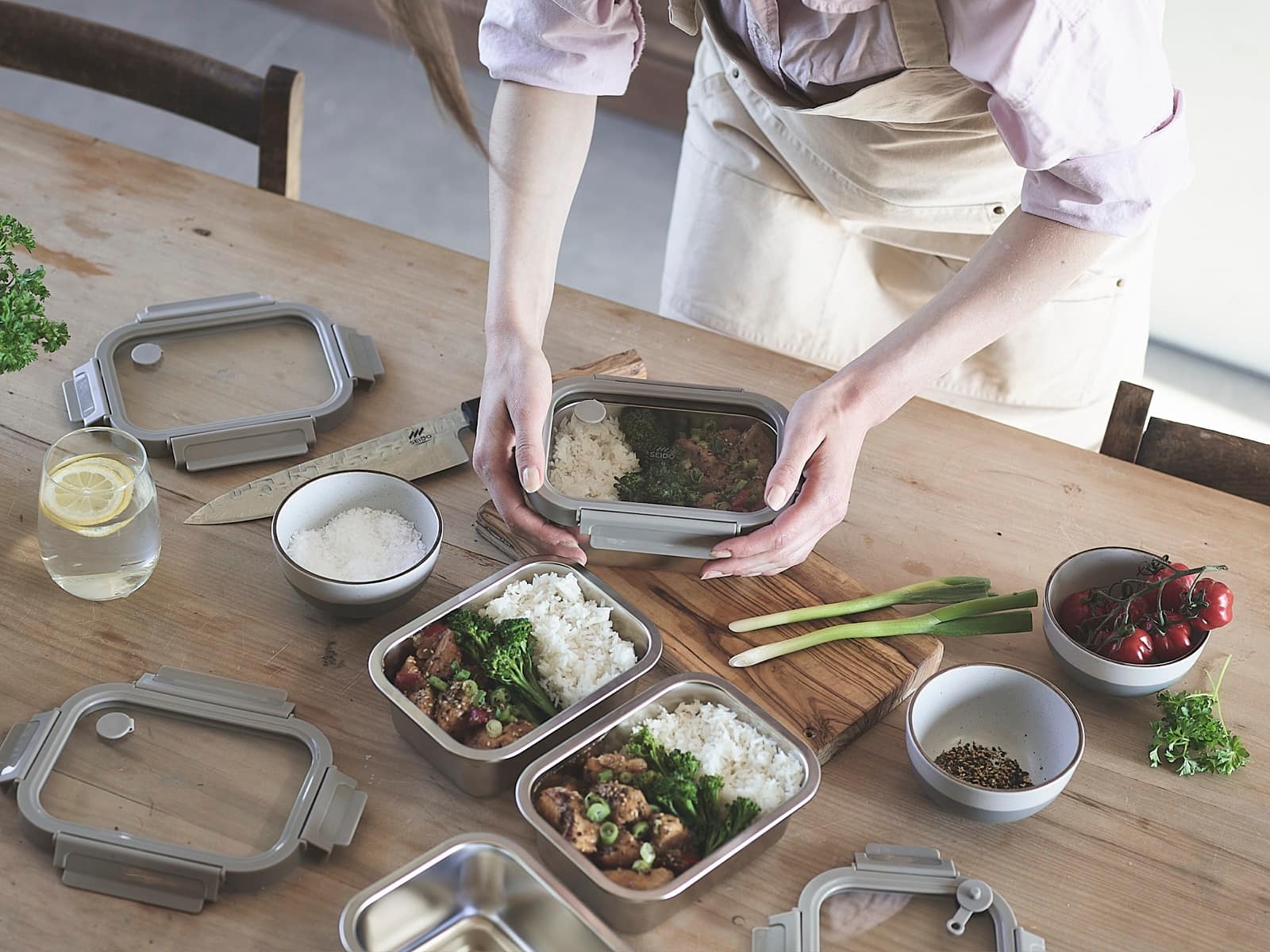
To meal prep for the week, cook once on Sunday, portion each meal into its own container and get it into the fridge within one to two hours. The Food Standards Agency advises eating fridge leftovers within 48 hours, so Monday and Tuesday come from the fridge and Wednesday to Friday go into the freezer.
Reheat each portion once, until it is steaming hot all the way through. Stainless steel suits the routine because it is non-porous, so it is less likely than many plastics to pick up stains and smells, but it doesn't make food keep any longer: the time limits come from food safety, not from the container.
How do you plan a week of meal prep?
Start with the calendar, not the recipes. Count the meals you actually need to carry: lunch at work, a meal after an evening training session, or both. Five working-day lunches is a common starting point, and it's the plan this guide follows.
Then pick a small set of components that cook well in bulk, reheat well and freeze well: one or two proteins, a grain or starch, a tray of roasted vegetables, and a sauce kept to one side. Components are more flexible than finished dishes. The same chicken thighs, rice and roasted peppers can be packed three different ways with a change of sauce or spice, which is often what keeps a plan going past Wednesday.
The hard limit on the plan comes from food safety, not from the container. The Food Standards Agency (FSA) advises eating leftovers kept in the fridge within 48 hours, and freezing them if that won't be possible. Cooked on Sunday, that covers Monday and Tuesday. Wednesday, Thursday and Friday need the freezer, or a second, smaller cook midweek.
What should you cook on Sunday?
Two methods do most of the work: searing in a frying pan on the hob and roasting on a baking tray in the oven. Run them side by side and a week of food takes roughly one afternoon.
Searing builds flavour on proteins that would otherwise taste flat by Thursday. Preheat an uncoated stainless steel frying pan until a few drops of water bead and glide across the surface, add a thin layer of oil, then lay in chicken thighs, steak or firm tofu that you've patted dry. Cook in batches with space between pieces, because a crowded pan traps steam and nothing browns. Leave each piece alone until the crust forms and it releases from the steel on its own.
While the frying pan works, roast vegetables on baking trays in the oven. Cut them to a similar size so they finish together, and spread them out in one layer. Broccoli, peppers, sweet potatoes, onions and courgettes all reheat well. Cook grains such as rice or quinoa on the hob in one large pan.
Cook meat thoroughly. UK food-safety guidance is to cook poultry, pork and anything made from minced meat, such as burgers and sausages, until it is steaming hot all the way through, with no pink meat and juices that run clear. Whole cuts of beef and lamb, such as steaks, only need the outside sealed. A food thermometer pushed into the centre takes out the guesswork.
When the frying pan is empty, deglaze the browned bits with a splash of stock or water and scrape them up. That's the base of a quick pan sauce to pack separately for the week.
How much food goes in each meal prep container?
Portion size is a personal decision that depends on your appetite and your training, so this guide doesn't prescribe amounts. What helps is using the same container every day, so a portion looks the same on Monday and on Friday and you can adjust it by eye.
An 800 ml (27 oz) container is a full-meal size rather than a snack size. Leave some headroom below the rim so the lid sits properly and there's room to stir the food when you reheat it.
A layout that packs cleanly is grain on one side, protein on the other, and vegetables filling the gaps. Keep wet sauces and dressings in a small separate container until you eat. That stops grains going soggy and cuts the chance of anything escaping in a gym bag. Pack each container upright.
- Portion while the food is still warm, then cool it quickly.
- Shallow layers cool faster than deep piles.
- Label each container with the day it's meant for.
- Keep crunchy toppings, herbs and sauces separate until mealtime.
How long does meal prep last in the fridge and freezer?
The FSA advises cooling cooked food and putting it in the fridge or freezer within one to two hours. Dividing a big batch into individual containers helps, because small, shallow portions cool faster than one deep pan. Your fridge should be between 0 and 5°C.
Leftovers kept in the fridge should be eaten within 48 hours, according to the FSA. That's a safety limit, and it doesn't change with the container. Stainless steel resists stains and smells, but it doesn't make food last longer.
Rice needs extra care. The FSA's advice is to cool cooked rice as quickly as possible, ideally within an hour, keep it in the fridge for no more than a day, and never reheat it more than once. If the week's meals are built on rice, eat the fridge portion the next day and get the rest into the freezer within an hour of cooking.
For the later days of the week, freeze those portions on Sunday, as soon as they have cooled. Move Wednesday's meal from the freezer to the fridge on Tuesday night, and so on through the week. The FSA advises eating food within 24 hours once it has defrosted.
- Sunday: cook, portion and cool, then get everything into the fridge or freezer within one to two hours.
- Monday and Tuesday: eat from the fridge (a rice-based meal: Monday only).
- Wednesday to Friday: frozen on Sunday, defrosted in the fridge the night before.
How do you keep meal prep cold on the way to work or the gym?
The FSA's guidance for food taken out of the fridge, written for picnics, applies just as well to a packed lunch: after four hours or more at warm temperatures (8°C and above), the risk from bacteria increases and food may become unsafe to eat. In extremely hot weather, use food that has been out of the fridge within 2 hours.
Carry the container in an insulated bag with ice packs spread around it, not all at the bottom, and put it in a fridge as soon as you arrive. If your gym has no fridge, eat the meal that's been in the insulated bag first and keep the gap between leaving home and eating as short as you can.
Can you reheat meal prep in a stainless steel container?
Only if the manufacturer says so, and only in the way it says. Metal reflects microwaves, so many stainless steel containers are not meant for the microwave at all. Always check the instructions for the container you own.
Where a steel container is approved for the microwave, the lid comes off, because the microwave energy has to reach the food through the open top. Spread the food in an even layer, stir it halfway through, and heat it until it is steaming hot all the way through. Reheat each portion only once.
Never run a microwave with an empty container inside. There has to be food in it to absorb the energy.
How do you wash and reset containers for next week?
Empty and rinse each container as soon as you can after eating, especially after oily or tomato-based meals. Food that dries on overnight takes longer to shift. Wash with hot water, washing-up liquid and a non-scratch sponge, and let everything dry fully before stacking.
If the lid's gasket is removable, take it out to wash it and let it dry before refitting. Trapped moisture under a gasket is where smells start.
By Friday evening the containers are clean and dry, ready for Sunday. Because stainless steel containers are reusable week after week, the only thing that changes in the routine is the menu.
Which containers work for this routine?
The SEIDO lunch box 3-pack fits this routine. Each container holds 800 ml (27 oz), is 304 (18/8) food-grade stainless steel and has a glass lid with a polypropylene frame and silicone gasket. The container is microwave-safe by design with the lid off: it is lab-tested in a microwave of up to 1000 W, and it must never be heated empty. It is dishwasher safe, hand wash recommended, and lab-tested for the freezer. The container, without its lid, is also lab-tested for the oven; the lid never goes in an oven. A 3-pack covers three meals, so a five-lunch week needs a second pack or a midweek wash. Each set comes with a 5-Year Limited Warranty (lid parts: 1 year). Buy now on Amazon.
Packing this way is what our lunch box 3-pack is built for.
Frequently asked questions
- How many days can you meal prep in advance?
- The Food Standards Agency advises eating leftovers kept in the fridge within 48 hours, and freezing them if that won't be possible. Food cooked on Sunday covers Monday and Tuesday from the fridge. For Wednesday to Friday, freeze those portions on Sunday and defrost each one in the fridge the night before, or do a second, smaller cook midweek.
- Are stainless steel meal prep containers reusable?
- Yes. Stainless steel containers are made to be washed and used again week after week. Steel is non-porous, so oils and sauces sit on the surface rather than soaking in, which makes the containers easier than many plastic ones to keep looking and smelling clean.
- Can you put a stainless steel meal prep container in the microwave?
- Only if the manufacturer says so. Many steel containers are not approved for the microwave. The SEIDO lunch box container is microwave-safe by design with the lid off: it is lab-tested in a microwave of up to 1000 W and must never be heated empty. Stir halfway through and heat until the food is steaming hot all the way through.
- How hot should reheated meal prep be?
- Steaming hot all the way through, which is the Food Standards Agency's test for reheated food. In a microwave, spread the food evenly and stir it halfway through to avoid cold spots, then check the centre of the portion. Reheat each portion only once.
- Which foods work well for weekly meal prep?
- Foods that cook well in bulk and reheat without falling apart: seared chicken thighs, steak or firm tofu, roasted vegetables such as broccoli, peppers and sweet potatoes, and grains like rice or quinoa. Keep sauces, dressings and crunchy toppings in a separate container until you eat, and keep cooked rice in the fridge for no more than a day.
Browse all stainless steel lunch boxes or keep reading: Can a Stainless Steel Lunch Box Go in the Oven? · Can You Freeze Food in Stainless Steel Containers? · Can You Microwave Stainless Steel?.
SEIDO Stainless Steel Lunch Box 3-Pack
See the lunch box 3-pack