How to Care for a Stainless Steel Frying Pan: Everyday Cleaning, Burnt-On Food and Storage
Published 27 February 2026 · Updated 12 October 2026
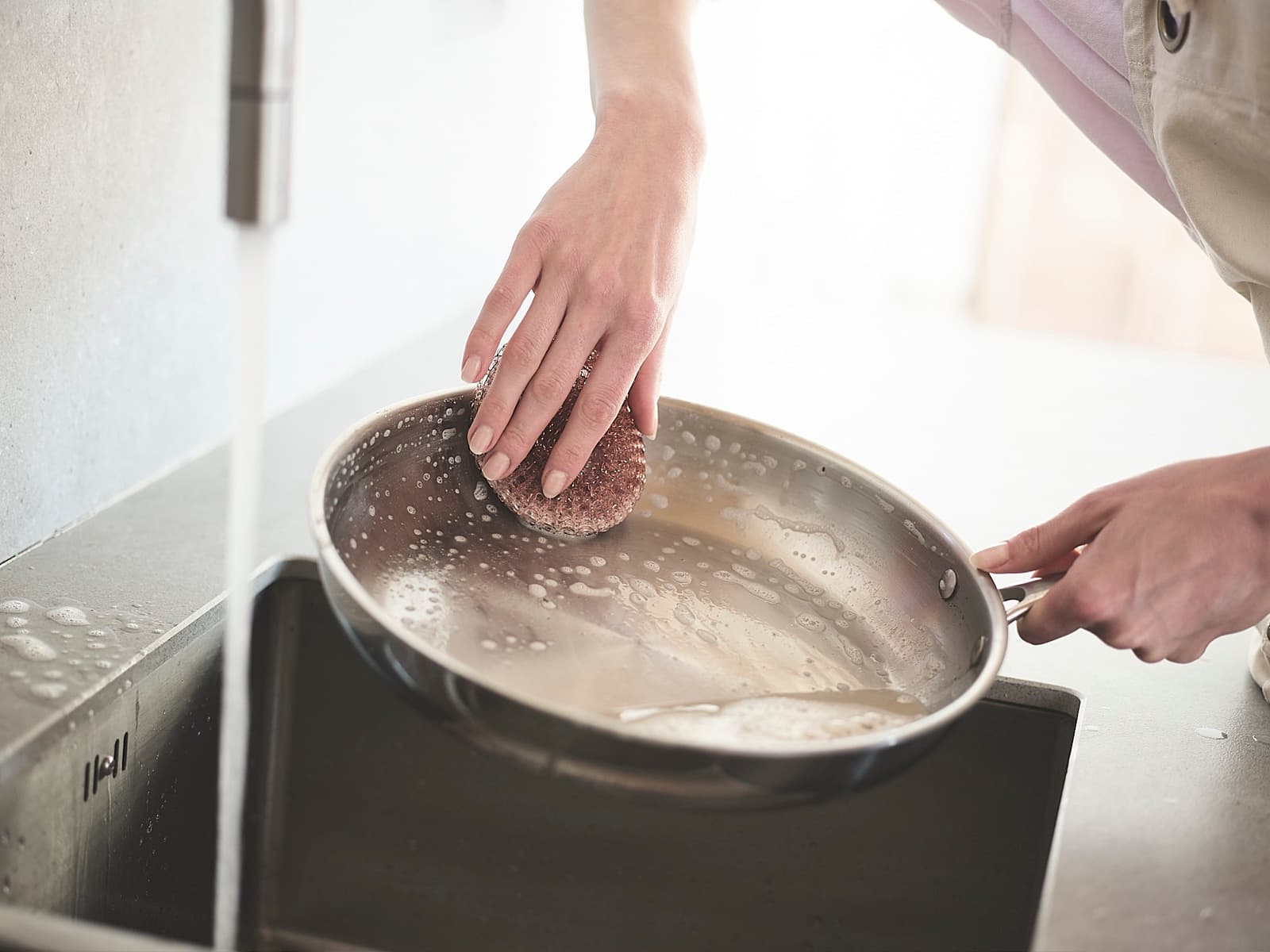
Caring for a stainless steel frying pan takes a few habits. Let it cool, wash it by hand in warm water with washing-up liquid, and dry it straight away. Lift burnt-on food by deglazing while the pan is still warm, then soak it or use bicarbonate of soda. Store it dry, with a cloth between stacked pans.
Because the cooking surface is uncoated steel, you can scrub as hard as a burn needs. There's no coating to protect, so cleaning removes the residue, not the pan — an advantage over coated pans, where every hard scrub shortens the coating's life.
How do you clean a stainless steel frying pan every day?
Most of the time a stainless steel pan needs nothing more than warm water, washing-up liquid and a sponge. Hand washing is recommended for SEIDO frying pans and their lids.
Washing soon after cooking is what stops residue building up. Oil left on the surface and heated again slowly turns into a sticky amber film, so a quick wash after each use saves a long scrub later. The routine:
- Let the pan cool until it is warm, not scorching. Never plunge a very hot pan into cold water.
- Rinse out loose food, then add a splash of hot water and scrape any browned bits loose with a wooden spoon.
- Wash with washing-up liquid and the soft or rough side of a sponge, inside and out, including the rim.
- Rinse well and dry with a tea towel. Drying by hand prevents white water spots from the minerals in tap water.
How do you get burnt-on food off a stainless steel pan?
The fastest fix is to deglaze the pan while it's still warm. Water hitting warm steel turns to steam, works into the burnt layer and breaks its grip on the metal — the same move cooks use to lift fond for a pan sauce. Take the pan off the heat for a minute or two, pour in about 240 ml of water, and scrape with a wooden spoon as it steams. Most of the burn lifts in under a minute.
Burnt-on food is mostly carbonised oil and protein bonded to the surface, and the longer it sits and cools, the harder it grips. If it survives the deglaze, work through these steps in order; most burns give way by the second or third:
- Soak. Fill the pan with hot water and a generous squirt of washing-up liquid, and leave it for 30 minutes, or overnight for a serious burn. The detergent creeps under the edges of the burnt layer and loosens its hold.
- Bicarbonate of soda paste. Mix roughly three parts bicarbonate of soda to one part water, spread it over the residue and leave it for 15 to 20 minutes, then scrub with the rough side of a sponge. It is mildly alkaline and mildly abrasive, so it loosens burnt residue without harming the steel.
- Simmer. Cover the burnt area with water, add a few tablespoons of bicarbonate of soda and simmer for 10 to 15 minutes. Let the pan cool slightly, then scrape with a wooden spoon.
- A stainless steel cookware cleaner. For the burn that survives everything else, use a powdered or cream cleaner made for stainless steel cookware, such as Bar Keepers Friend, and follow the label.
What should you never use on a stainless steel pan?
Stainless steel takes hard cleaning, but a few things work against the metal itself, and one habit works against the pan's shape:
- Chlorine bleach and chlorine-based cleaners. Chlorides attack the invisible chromium oxide layer that keeps stainless steel stainless, and prolonged contact can pit the surface. No burn needs bleach.
- Oven cleaner. Keep it off your pans: damage from bleach, chlorine-based cleaners or oven cleaner isn't covered by the warranty.
- Ordinary steel wool. It is plain carbon steel, and fine fragments can lodge in the surface and rust, leaving orange specks. The stainless steel isn't rusting; the embedded iron is. An oxalic acid cleaner dissolves the specks.
- Coarse pads on the outside. The cooking surface can take a hard scrub, but a polished exterior can dull under coarse pads, so use the gentler steps on the outside.
- Cold water in a very hot pan. Deglazing a warm pan is fine; dousing a pan straight off a high heat is thermal shock, which can warp the base. Give it a minute or two first.
What about rainbow tint, white spots and brown film?
Marks on stainless steel are rarely damage. Rainbow, gold or blue heat tint is the steel's thin oxide layer grown thicker by heat; it's cosmetic and usually wipes away with diluted white vinegar on a soft cloth. White chalky spots are minerals from tap water, and vinegar dissolves them too. A sticky amber or brown film is polymerised oil, which a bicarbonate of soda paste and a firm scrub remove. Rinse and dry after each.
Our guide to removing stains from stainless steel cookware covers every mark in detail, including the two that are damage rather than stains: pitting and warping.
How should you look after the pan when you cook?
Most cleaning problems start on the hob. A few habits prevent them:
- Preheat over a low to medium heat. Never heat an empty pan on high, and never let it boil dry.
- Use a hob ring about the same size as the base. On gas, keep the flame under the base: flames up the sides heat the handle and discolour the pan.
- On glass and ceramic hobs, lift the pan rather than sliding it, and keep the base clean and dry.
- Add salt to water only once it boils. Undissolved salt sitting on the steel can leave small pits.
- Deglaze browned bits before they darken past deep brown. Golden-brown residue is flavour; black residue is carbon.
- Metal utensils are fine. They can leave fine marks in the steel, which are cosmetic.
- SEIDO frying pans are oven-safe to 260°C (500°F) for up to 1 hour. The pan never goes under the grill.
- Handles get hot on the hob and especially in the oven, so use a dry oven glove or tea towel.
How should you store a stainless steel frying pan?
Store the pan clean and completely dry. If you stack pans, put a cloth or pan protector between them, and between the pan and its lid, so the polished surfaces don't scratch each other.
Don't store food in the pan. Acidic or salty food left in it for a long time can mark or pit the steel, so move leftovers into a storage container once the meal is over.
What does the 5-Year Limited Warranty cover?
Every SEIDO frying pan — body, handle and stainless steel lid — carries a 5-Year Limited Warranty covering defects in materials and workmanship under normal home use, in addition to your statutory rights. Normal wear, heat tint, water spots, utensil marks and damage from misuse, such as overheating an empty pan or letting it boil dry, aren't defects. If you're unsure, email customerservice@seidocookware.co.uk with your Amazon order number and a photo, and we'll take a look.
Cooking this way is what our 24 cm frying pan is built for.
Frequently asked questions
- Should you wash a stainless steel frying pan by hand?
- Hand washing is recommended for SEIDO frying pans and their lids. Let the pan cool, wash it in warm water with washing-up liquid and a sponge, then rinse and dry it straight away with a tea towel, which also prevents water spots.
- Will scrubbing ruin a stainless steel pan?
- No. An uncoated stainless steel pan has no coating to scrub off, so hard cleaning removes the burn, not the pan. The steel resists staining and everyday abrasion; at most, hard scrubbing leaves fine cosmetic marks that don't change how the pan cooks. Keep coarse pads off a polished exterior.
- Can bicarbonate of soda scratch stainless steel?
- No. Bicarbonate of soda is a mild abrasive far softer than stainless steel, which is why it lifts carbonised residue without marking the cooking surface. That makes it the safe middle step for cleaning: stronger than a soak in soapy water, gentler than a dedicated stainless steel cleaner.
- Is Bar Keepers Friend safe on stainless steel pans?
- Yes, when used as the label directs. Its oxalic acid dissolves heat tint, water spots and rust-coloured marks, and its fine abrasive lifts stuck residue. Keep contact time short, wear gloves if the label advises it, rinse the pan thoroughly and never mix it with bleach.
- Why did food burn onto my stainless steel pan?
- Almost always heat management. The pan was too hot, there was too little fat, or the food was moved before it released. Preheat the pan, add oil before the food, keep the heat at medium for most cooking, and deglaze the browned bits before they darken past deep brown.
Browse all stainless steel frying pans or keep reading: Can You Cook Acidic Foods in Stainless Steel? · Can You Put a Stainless Steel Pan in the Oven? · How Hot Should a Stainless Steel Pan Be?.
SEIDO 24 cm Stainless Steel Frying Pan
See the 24 cm frying pan