Why Your Peeler Matters More Than You Think
Published 25 September 2025 · Updated 12 October 2026
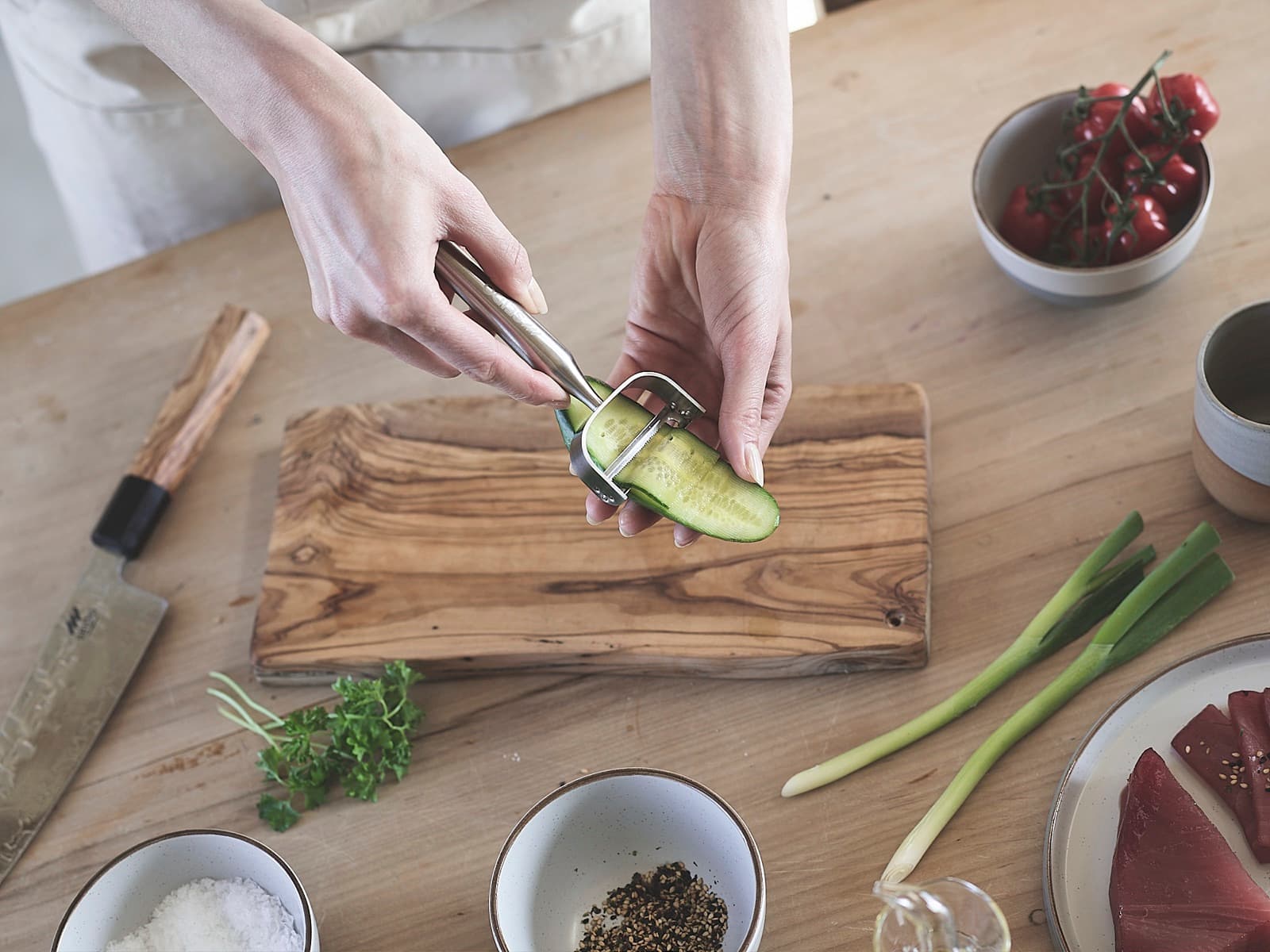
A good peeler matters because peeling is everyday, repetitive work. A sharp blade lifts a thin, even strip of skin, wastes less of the food beneath and needs less pressure, so the job is quicker and easier on your hand. A serrated blade adds grip on soft, slippery skins that a smooth blade slides over.
This article covers what a good peeler saves, how serrated and smooth blades differ, how to peel quickly and safely, and how to keep a peeler working. The SEIDO Cookware serrated peeler is stainless steel, with a serrated blade, and carries a 5-Year Limited Warranty.
Why does a good peeler matter?
Peeling is repetitive: potatoes for a Sunday roast, carrots for the week, apples for a crumble. A peeler that grips and cuts cleanly turns that into quick, even strokes. A blunt or clumsy one skids, digs in, needs going over twice and leaves your hand tired.
Because a peeler is such a small tool, it rarely gets a second thought, and plenty of kitchens put up with a blunt one for years. When the strokes start to drag, it is the peeler, not you.
How does a sharp peeler cut waste?
A sharp blade takes off the skin and little else. A blunt one tears thicker strips, or leaves patches you then cut away with a knife, and more of each vegetable ends up in the food waste caddy. Over a year of potatoes, carrots and apples, thin strips add up.
The simplest saving is not peeling where you do not need to. New potatoes, young carrots, cucumbers and courgettes can usually just be washed or scrubbed; peel when a tough skin or a recipe calls for it.
Peelings need not be wasted either. Clean vegetable peelings and trimmings can go into a stock, and the rest into the food waste caddy or the compost.
Serrated or smooth: which blade do you need?
A smooth blade has one continuous edge. It glides along firm, dry skins — potatoes, carrots, parsnips, apples — and leaves a clean surface.
A serrated blade has a row of fine teeth. The teeth catch skin that a smooth edge tends to skate across, so they start the cut with light pressure. That makes a serrated peeler the one to reach for with ripe tomatoes, peaches, kiwi and other soft or slippery skins, and it handles everyday carrots, cucumbers and potatoes too.
If you only want one peeler, a serrated blade covers soft fruit as well as everyday vegetables.
How do you peel quickly and safely?
A few habits make peeling faster, neater and kinder to your fingers:
- Hold long vegetables, such as carrots and cucumbers, by one end with the other end resting on a chopping board, and peel down towards the board in long strokes.
- Turn the vegetable a little after each stroke, so the strips sit side by side and nothing is peeled twice.
- Keep the fingers of your holding hand out of the blade's path, and slow down at the end of each stroke.
- On soft fruit, use short, light strokes and let the teeth of a serrated blade do the work; pressing hard squashes the flesh.
- Peel over a bowl or the food waste caddy, so the peelings go straight where they belong.
How do you keep a peeler working?
Rinse it straight after use, before skin and juice dry on the blade; a washing-up brush clears anything caught in the teeth of a serrated blade. Dry it, then store it where the blade will not rattle against other tools in a crowded drawer.
A peeler blade is not easy to sharpen at home, so looking after the edge is the way to keep it cutting. The SEIDO Cookware serrated peeler carries a 5-Year Limited Warranty covering defects in materials and workmanship under normal home use; a blade that dulls with use is normal wear, not a defect.
Peeling this way is what our serrated peeler is built for.
Frequently asked questions
- What is a serrated peeler good for?
- Soft, slippery skins that a smooth blade tends to slide over — ripe tomatoes, peaches and kiwi — because its teeth catch the skin and start the cut with light pressure. It peels everyday carrots, cucumbers and potatoes too. The SEIDO Cookware serrated peeler is stainless steel, with a serrated blade.
- Which vegetables don't need peeling?
- Many can simply be washed or scrubbed, including new potatoes, young carrots, cucumbers and courgettes. Peeling only where a tough skin or a recipe calls for it saves time and keeps more of each vegetable on the plate.
- How do I peel without wasting food?
- Use a sharp peeler and long, even strokes, turning the vegetable so each strip sits beside the last and nothing is peeled twice. A sharp blade takes off the skin and little else; a blunt one tears thicker strips and leaves patches you have to cut away with a knife.
- How do I stop a peeler slipping?
- Slipping happens on soft, wet or waxy skins, where a smooth blade has little to bite into; the teeth of a serrated blade catch them. Dry slippery produce with a clean tea towel, hold it lightly but steadily, and use shorter strokes.
- Can you sharpen a vegetable peeler?
- Not easily at home, and a serrated blade is harder still. The way to keep a peeler cutting is to rinse it straight after use, dry it and store it where the blade will not knock against other tools.
Browse all kitchen tools or keep reading: Damascus Chef's Knife Care Guide · Honing Steel Care Guide · Serrated Peeler Care Guide.
SEIDO Stainless Steel Serrated Peeler
See the serrated peeler