Your First Kitchen: The Essential Starter Kit
Published 5 September 2025 · Updated 12 October 2026
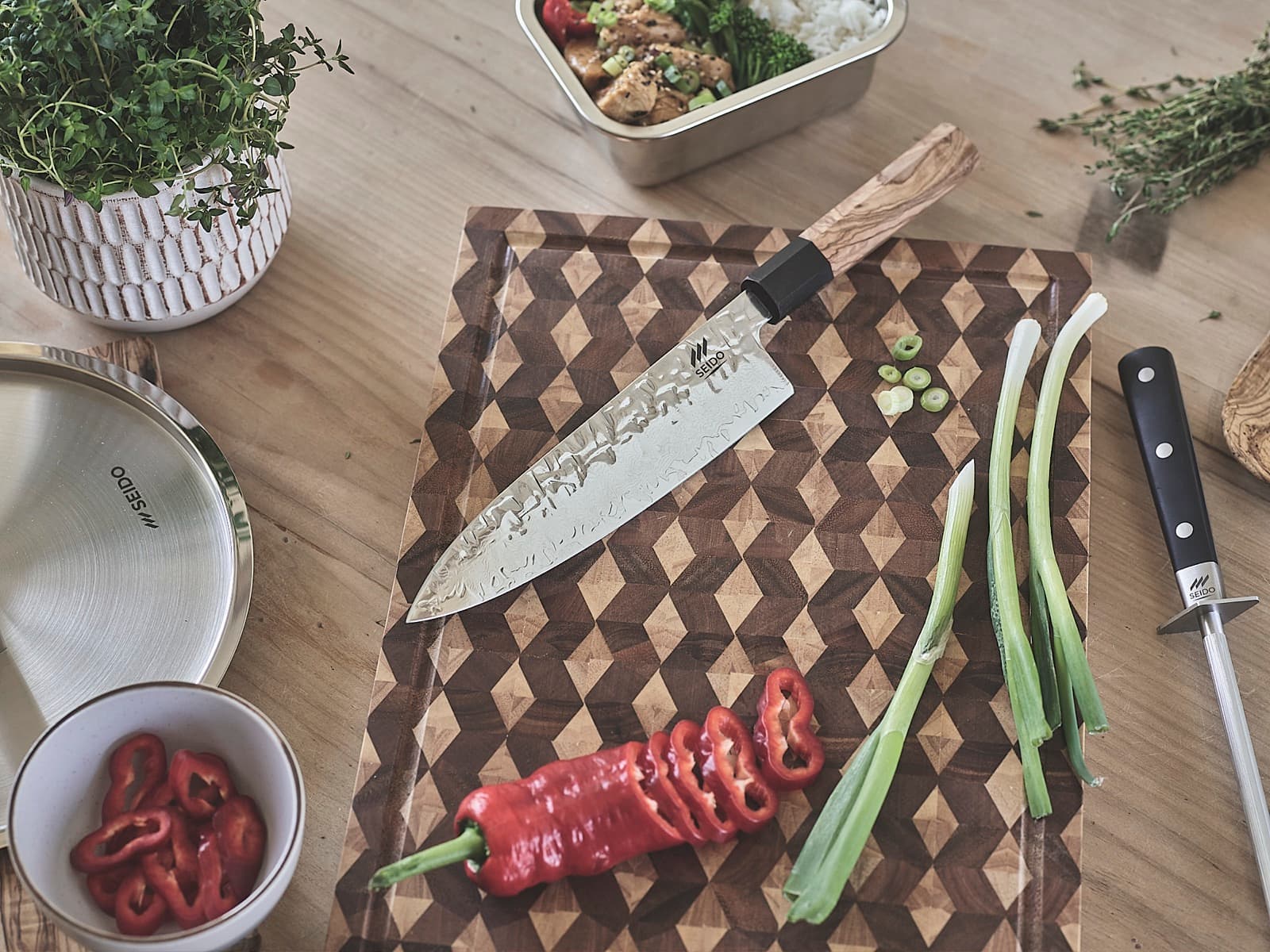
A first kitchen needs fewer things than you might think. Start with five: a good frying pan, a chef's knife, a honing steel to keep that knife cutting cleanly, a peeler and a set of containers for leftovers and lunches. Add a chopping board and a saucepan, and you can cook most everyday meals.
Fewer, well-chosen pieces that each do several jobs leave room — in the cupboard and in the budget — to add things as your cooking grows. This guide covers what to look for in each piece, what can wait and how SEIDO Cookware's range fits a first kitchen.
What does a first kitchen really need?
It is easy to buy far more than you use, and plenty of kitchen kit ends up unused at the back of a drawer. A working kitchen is built around a handful of pieces you reach for every day: something to cook in, something to cut with, something to prepare vegetables and something to keep food in.
Choose pieces that do several jobs. A good frying pan fries, sears, sautés and makes a pan sauce. A chef's knife chops, slices and dices most of what you buy. Add specialist tools when you notice a gap, not before.
- A frying pan around 24 cm (9.5 in) across, for everyday cooking
- A chef's knife, for most chopping and slicing
- A honing steel, to keep the knife's edge in line
- A peeler, for vegetables and fruit
- Matching containers, for leftovers and packed lunches
- Alongside them: a chopping board and a saucepan with a lid
Which frying pan should you buy first?
Buy one everyday pan before you buy a set. A 24 cm (9.5 in) frying pan cooks a full meal for one or two — two chicken breasts, a stir-fry for two, three or four eggs — with room to brown food rather than steam it. If you regularly cook for four or more, a 28 cm (11 in) pan is the better first choice.
The other decision is the surface. A non-stick pan relies on a coating that wears with heat, utensils and time. An uncoated stainless steel pan has no coating to wear out, and it asks you to learn one habit instead: preheat the dry pan over a medium heat, check that a drop of water beads and glides, then add oil, then food.
SEIDO Cookware's 24 cm (9.5 in) frying pan is uncoated, with a tri-ply clad body: a 304 (18/8) stainless steel cooking surface, an aluminium core and a 430 stainless steel exterior. It is made without intentionally added PFAS, works on gas, electric, ceramic and induction hobs, and is oven-safe to 260°C (500°F) for up to 1 hour. It comes with a matching stainless steel lid.
What should you look for in a first chef's knife?
One good chef's knife does more than a block of knives you rarely use. It dices onions, slices peppers, chops herbs, minces garlic and portions meat and fish. Look for a blade long enough to cut through a large onion in a single stroke and a handle that feels secure in a pinch grip: thumb and the side of your index finger on the blade, the other fingers around the handle.
Treat it well and it stays useful. Cut on a wooden or plastic board, wash it by hand, dry it straight away, and store it where the edge cannot knock against other tools — a block, a magnetic strip or a blade guard.
The SEIDO Cookware chef's knife has a VG10 steel core clad in Damascus stainless steel, a blade of about 22 cm (8.7 in) and an octagonal olive wood handle. It comes in a hinged gift box, is hand wash only and carries a 5-Year Limited Warranty.
How do you keep a knife sharp?
With use, a knife's very fine edge bends slightly out of line — it rolls — and the knife starts to feel dull even though the edge has not worn away. A honing steel pushes that edge back into line in a few light strokes. Sharpening is a different job: it grinds away a little metal to form a new edge, on a whetstone, with a sharpener or at a sharpening service.
Hone little and often — the insert that comes with the SEIDO Cookware chef's knife recommends every 2–3 uses — and sharpen when honing no longer brings back a clean cut. A ripe tomato is a good test: if the knife still drags or crushes it after honing, the edge needs sharpening.
The SEIDO Cookware honing steel has a 20 cm (8 in) rod on a riveted handle, with a guard at the base of the rod, and carries a 5-Year Limited Warranty.
Why does a peeler belong in a starter kit?
A peeler is one of the most used tools in a kitchen and one of the least considered. It takes care of potatoes, carrots and cucumbers every week, and it does a few jobs a knife does slowly: shaving Parmesan, making courgette ribbons and taking thin strips of citrus zest.
Blades come smooth or serrated. A smooth blade glides along firm vegetables; a serrated blade's teeth catch soft, slippery skins — ripe tomatoes, peaches, kiwi — that a smooth edge tends to slide over.
The SEIDO Cookware serrated peeler is stainless steel, with a serrated blade, and carries a 5-Year Limited Warranty. Rinse it straight after use, before skin dries between the teeth.
What containers do you need for leftovers and lunches?
Containers turn one evening's cooking into the next day's lunch. Matching containers stack neatly in the fridge, and a set of one size makes it easy to divide a batch of chilli, curry or grains into equal meals. Cool cooked food quickly before it goes in the fridge, and keep a packed lunch cold until you eat it.
If you want to reheat at work, check what each container is rated for before it goes in the microwave: many stainless steel food containers carry a do-not-microwave warning.
The SEIDO Cookware stainless steel lunch box 3-pack holds three 800 ml (27 oz) containers in 304 (18/8) food-grade stainless steel, each with its own lid. The containers are microwave-safe by design (lid off, in a microwave of up to 1000 W), oven-safe without the lid, fridge and freezer safe, and dishwasher safe with hand washing recommended — each lab-tested. The set carries a 5-Year Limited Warranty (lid parts: 1 year).
What can wait until later?
Plenty of useful kit can wait until your cooking asks for it. Buy when you notice the gap rather than because a list says so.
- A knife block set — one good chef's knife covers most jobs; add a paring knife or a bread knife when you need one
- Single-job gadgets such as garlic presses and avocado slicers — a sharp knife does both jobs
- A second frying pan — a 20 cm (8 in) for eggs and single portions, or a 28 cm (11 in) for cooking for more people
- A stockpot or a roasting tin, once you cook in bigger batches
- Larger appliances, from slow cookers to stand mixers, until you know you will use them every week
How do you look after a starter kit?
A few habits keep everything working.
Every SEIDO Cookware product carries a 5-Year Limited Warranty (lunch box lid parts: 1 year), and the range is sold in the UK on Amazon.co.uk.
- Frying pan — let it cool, then wash it by hand in warm water with washing-up liquid; a short soak lifts anything stuck on
- Chef's knife — hand wash only; dry it straight away and hone it regularly
- Olive wood handle — rub in a little food-safe oil or wax now and then
- Peeler — rinse it straight after use and dry it before it goes back in the drawer
- Lunch box containers — dishwasher safe, with hand washing recommended; wash the lid and the container separately
Starting a kitchen this way is what our 24 cm frying pan is built for.
Frequently asked questions
- What is the one frying pan to buy for a first kitchen?
- A 24 cm (9.5 in) frying pan. It cooks a complete meal for one or two — two chicken breasts, a stir-fry for two, a three-egg omelette — and stays easy to store. If you regularly cook for four or more, start with a 28 cm (11 in) frying pan instead and add a smaller pan later.
- Do I need a knife block set?
- No. One good chef's knife handles most everyday cutting, and a honing steel keeps its edge in line between sharpenings. Add a paring knife or a bread knife when you find a job the chef's knife does awkwardly, rather than buying a set of knives you rarely use.
- What is the difference between honing and sharpening?
- Honing pushes a knife's rolled edge back into line, which brings back a clean cut; sharpening grinds away a little metal to form a new edge. Hone little and often — the insert with the SEIDO Cookware chef's knife recommends every 2–3 uses — and sharpen when honing no longer restores the cut.
- Should a first frying pan be non-stick or stainless steel?
- It depends on how you cook. A non-stick pan releases food easily but relies on a coating that wears over time. An uncoated stainless steel pan has no coating to wear out and builds the browned fond that makes pan sauces, but it needs preheating: heat the dry pan, check that a drop of water beads and glides, then add oil and food.
- Can a stainless steel lunch box go in the microwave?
- Only if its maker says so: many stainless steel containers carry a do-not-microwave warning. The SEIDO Cookware lunch box containers are microwave-safe by design and lab-tested with the lid off, in a microwave of up to 1000 W. They are also fridge and freezer safe, and dishwasher safe with hand washing recommended.
- What warranty does SEIDO Cookware offer?
- Every SEIDO Cookware product — the frying pans, the chef's knife, the honing steel, the serrated peeler and the lunch box set — carries a 5-Year Limited Warranty, with the lunch box lid parts covered for 1 year. The range is sold in the UK on Amazon.co.uk.
Browse all the SEIDO Cookware range.
SEIDO 24 cm Stainless Steel Frying Pan
See the 24 cm frying pan