Stainless Steel vs Copper Cookware: Heat, Care and Cost
Published 30 January 2026 · Updated 12 October 2026
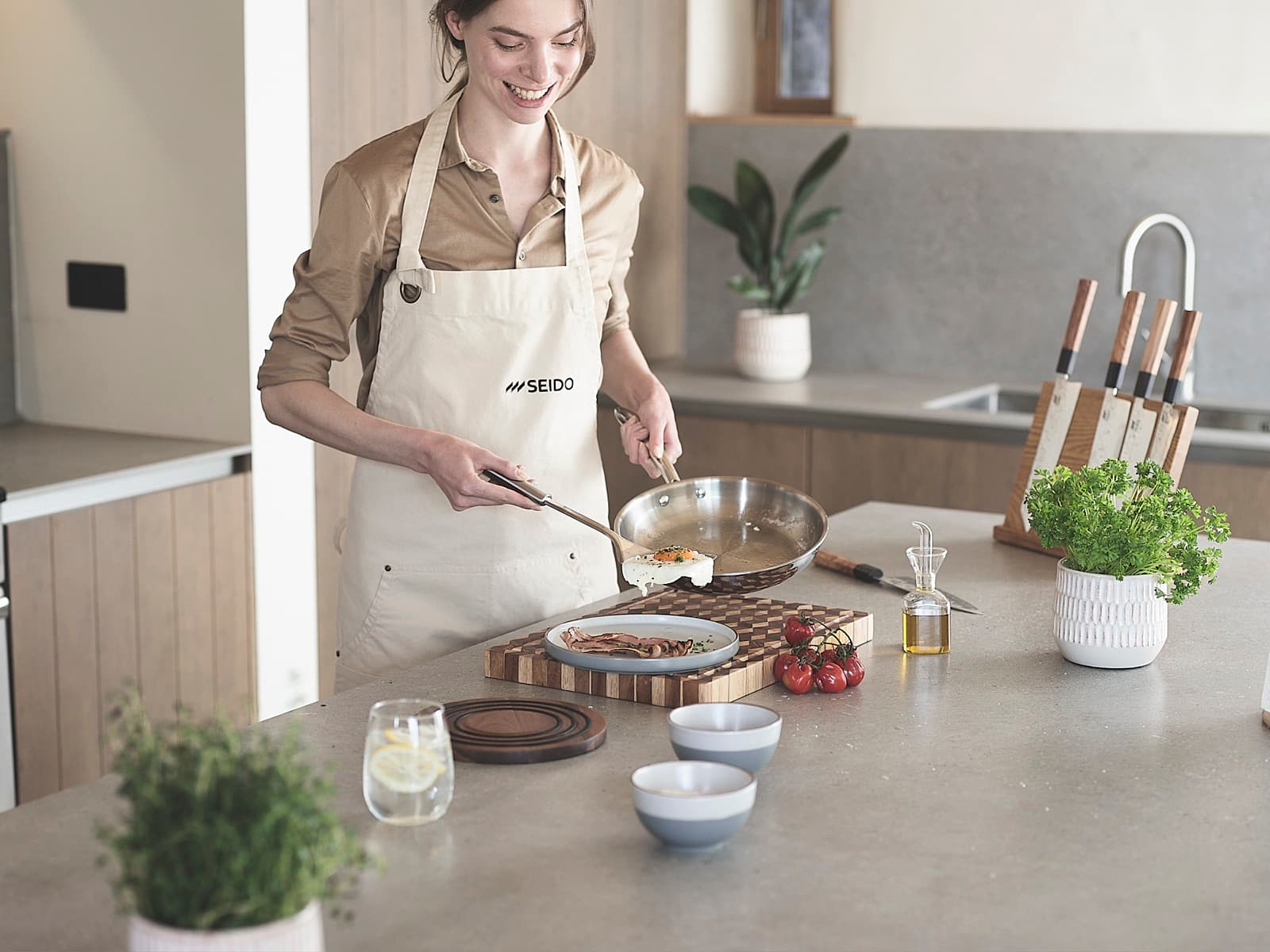
Copper conducts heat far better than stainless steel, so a copper pan heats evenly and responds quickly to changes of heat. It costs more, usually needs a lining because bare copper reacts with many foods, and tarnishes. Stainless steel is tougher and easier to look after; tri-ply clad pans add an aluminium core to spread heat.
This guide explains conductivity in plain words, what a lined copper pan is, how the care and the cost compare, and where a tri-ply clad stainless steel pan sits between the two metals.
What does conductivity mean in a pan?
Conductivity is how quickly heat moves through a metal. In a pan, heat enters from the flame or the hob underneath and has to travel sideways across the base and up the walls before it reaches all of the food. A metal that conducts well spreads that heat quickly, so the whole cooking surface comes up to temperature together; a metal that conducts poorly lets heat gather over the source, leaving a hot centre and cooler edges.
Conductivity also governs how a pan responds. Turn the heat down under a pan made of a good conductor and the change reaches the food quickly; a poor conductor carries on at the old temperature for longer. Thickness matters as well: more metal stores more heat and changes temperature more slowly, whatever it is made of.
Copper is one of the best conductors of heat used in cookware. Aluminium is a good conductor too, though not as good as copper. Stainless steel is a poor conductor — aluminium conducts heat many times faster — which is why a pan made of stainless steel alone heats in patches.
How does copper cookware cook?
A well-made copper pan heats quickly and evenly from the centre to the edge, and it follows the dial closely: turn the heat down under a sauce on the point of splitting and the pan cools quickly. That control is why copper has long been favoured for delicate jobs such as sauces and caramel.
The thickness of the copper matters as much as the metal. Thin copper, as on many decorative pans, spreads heat less evenly; thicker copper spreads it better and costs more.
Copper is not magnetic, so a plain copper pan does not work on an induction hob unless the maker has bonded a magnetic layer to its base. Check the maker's statement before buying copper for induction.
Why is most copper cookware lined?
Bare copper reacts with food. Acidic ingredients such as tomato, wine, vinegar and citrus react with the metal and can discolour the food and leave a metallic taste. So most copper pans for everyday cooking are lined: a thin layer of another metal covers the copper inside the pan, and that lining is what touches the food.
- Tin: the traditional lining. It is fairly slick, but it is soft and melts at a relatively low temperature, so tin-lined pans must not be heated empty or on a high heat, need wooden or silicone utensils, and eventually wear through and need re-tinning by a specialist.
- Stainless steel: a thin layer of stainless steel bonded inside the copper. It is harder-wearing than tin, takes higher heat, tolerates metal utensils and never needs re-tinning, but food sticks to it more readily, as it does to any stainless steel surface.
- Unlined copper: kept for a few specialist jobs, such as sugar work and whisking egg whites in a copper bowl, and not for acidic dishes.
How do you look after copper and stainless steel?
Copper's outside tarnishes with use, darkening from bright copper to brown. Many owners polish it back with a copper cleaner, or a paste of lemon juice or vinegar and salt, then rinse and dry it; others keep the darker patina, which is cosmetic. Stainless steel needs no polishing at all.
- Copper: wash by hand in warm water with washing-up liquid, dry it straight away and keep it out of the dishwasher, which dulls and discolours the metal.
- Tin-lined copper: a low to medium heat only, never empty on the heat, and wooden or silicone utensils.
- Stainless steel: wash with hot water and washing-up liquid and soak anything stuck on; a paste of bicarbonate of soda and water handles browned residue, and a splash of white vinegar lifts rainbow heat tint.
- Both: let a hot pan cool before it meets cold water.
Is copper cookware worth the cost?
Copper costs considerably more than stainless steel for a pan of the same size, and thicker copper costs more again. What the extra cost buys is heat control: copper conducts heat better than any other common cookware metal, which gives a copper pan a quick, even response. For cooks who make delicate sauces and caramel often, that control can be worth paying for.
For everyday frying, searing and sautéing, a clad stainless steel pan is the practical alternative: its conductive core spreads heat far better than stainless steel alone, and it needs no polishing, no lining care and no re-tinning. Whether copper's extra responsiveness is worth the price and the upkeep depends on how often you cook the dishes that need it.
Where does tri-ply clad stainless steel sit between the two?
A tri-ply clad pan bonds three layers into one body: stainless steel inside, a core of a more conductive metal — usually aluminium — in the middle, and stainless steel outside. The core spreads heat sideways; the steel gives a tough, non-reactive cooking surface that needs no lining, no polishing and no re-tinning. It sits between the two metals: better at spreading heat than stainless steel alone, and easier to look after than copper.
Some clad pans use a copper core instead of aluminium, and some copper pans are lined with stainless steel; in both cases the steel is the cooking surface. Clad stainless steel pans built for induction carry a magnetic stainless steel on the outside, which plain copper lacks.
Choose copper if precise heat control for delicate cooking matters most and you are happy to polish, protect a lining and pay more. Choose clad stainless steel if you want even heating with simple care, a surface you can scrub and, with a magnetic exterior, a pan that works on induction.
What are SEIDO frying pans made of?
SEIDO frying pans are tri-ply clad: a 304 (18/8) stainless steel cooking surface, an aluminium core and a 430 stainless steel exterior. The cooking surface is uncoated and made without intentionally added PFAS, so there is no lining or coating to protect. They come in 20 cm (8 in), 24 cm (9.5 in) and 28 cm (11 in), each with a matching stainless steel lid, work on gas, electric, ceramic and induction hobs, are oven-safe to 260°C (500°F) for up to 1 hour, and are backed by a 5-Year Limited Warranty.
Cooking this way is what our 24 cm frying pan is built for.
Frequently asked questions
- Is copper cookware better than stainless steel?
- Copper conducts heat far better, so it heats more evenly and responds faster to changes of heat. Stainless steel is tougher, non-reactive and simpler to look after. Neither is better for every cook: copper suits delicate, temperature-sensitive cooking; clad stainless steel suits everyday frying, searing and sauces with easy care.
- Does copper cookware work on induction hobs?
- Plain copper does not, because induction needs a magnetic base and copper is not magnetic. Some copper pans have a magnetic layer bonded to the base for induction, so check the maker's statement. Clad stainless steel pans built for induction carry a magnetic stainless steel exterior.
- What is the difference between tin-lined and stainless steel-lined copper?
- Tin is the traditional lining: fairly slick, but soft, and it melts at a relatively low temperature, so tin-lined pans need gentle heat, non-metal utensils and re-tinning when the lining wears. A stainless steel lining is harder-wearing, takes higher heat and never needs re-tinning, but food sticks to it more readily, as it does to any stainless steel surface.
- Why does my copper pan go dark?
- That is tarnish, a thin layer that forms as copper reacts with air, moisture and heat. It is cosmetic. Polish it off with a copper cleaner, or a paste of lemon juice or vinegar and salt, then rinse and dry the pan; or keep the patina if you like the look.
- Is a copper-core stainless steel pan the same as a copper pan?
- No. A copper-core pan is a clad stainless steel pan with copper in the middle of its layers. You cook on stainless steel and look after it like stainless steel. A copper pan has copper on the outside, usually with a tin or stainless steel lining inside.
- Do SEIDO frying pans have a copper core?
- No. SEIDO frying pans have a tri-ply clad body with an aluminium core: a 304 (18/8) stainless steel cooking surface, an aluminium core and a 430 stainless steel exterior. The cooking surface is uncoated, the pans work on induction hobs, and each carries a 5-Year Limited Warranty.
Browse all stainless steel frying pans or keep reading: Can You Cook Acidic Foods in Stainless Steel? · Can You Put a Stainless Steel Pan in the Oven? · How Hot Should a Stainless Steel Pan Be?.
SEIDO 24 cm Stainless Steel Frying Pan
See the 24 cm frying pan