Stainless Steel vs Cast Iron Frying Pans: Heat, Weight, Care and Cooking
Published 28 December 2025 · Updated 12 October 2026
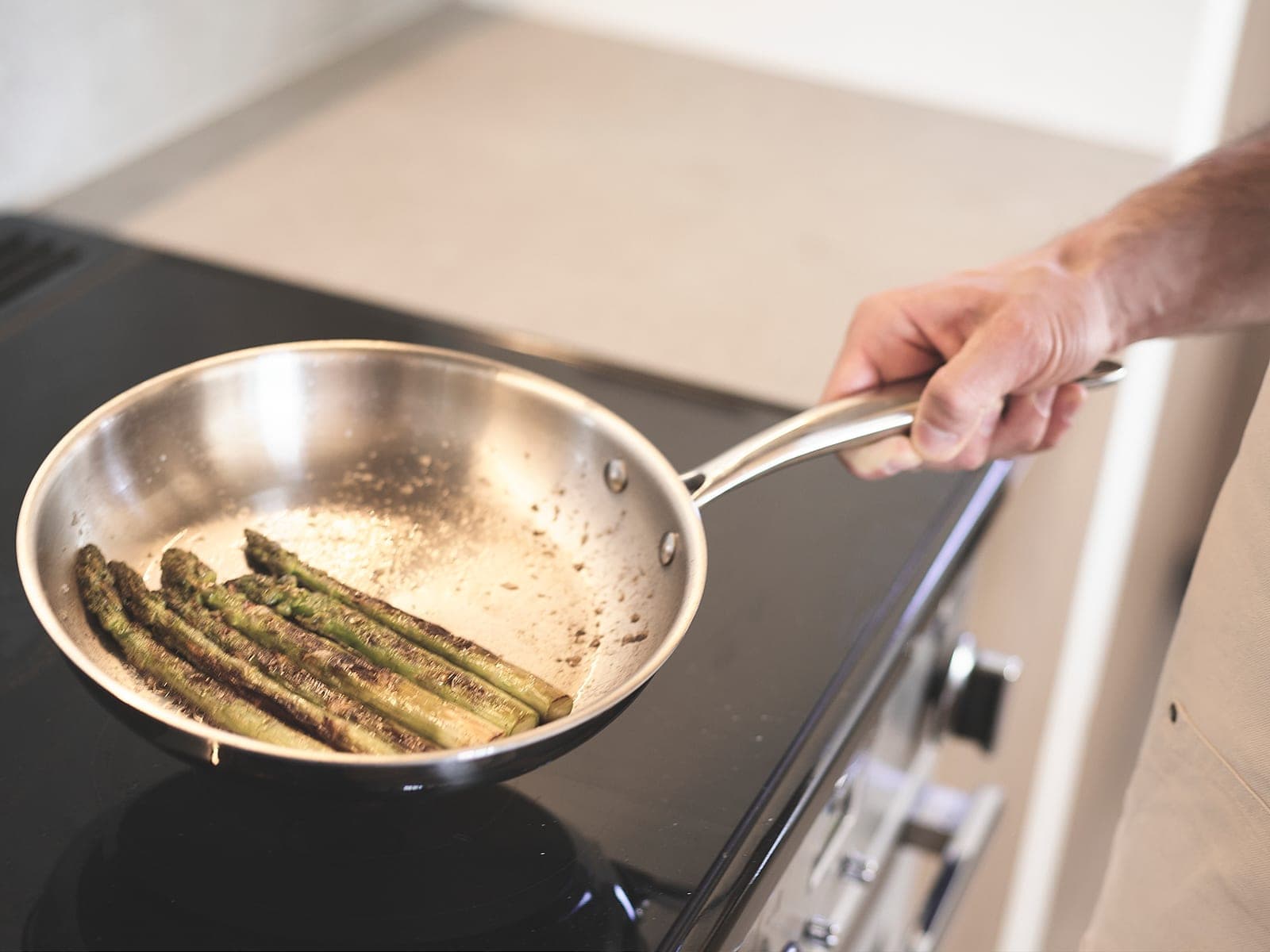
Cast iron is thick, heavy iron that heats slowly, holds heat for a long time and needs seasoning to resist rust and release food. Stainless steel needs no seasoning, resists rust on its own, stays neutral with acidic food and is usually lighter. Cast iron excels at long sears; stainless steel at everyday cooking and pan sauces.
Neither is better in every kitchen. Below, the two are compared on heat, weight, seasoning, acidic food, induction hobs and care, then matched to the dishes each one suits.
What is the difference between cast iron and stainless steel?
Cast iron is iron with a relatively high carbon content, poured into a mould to make a thick, one-piece pan, usually with the handle cast in. Its bare surface is reactive iron, so it relies on seasoning — oil heated onto the metal until it polymerises into a hard, dark layer — to protect it from rust and help food release.
Stainless steel is iron alloyed with at least 10.5% chromium. The chromium forms a thin, invisible oxide film on the surface that re-forms on its own if it is scratched, which is why stainless steel resists rust and needs no seasoning. Common food-grade stainless steel, such as 304 (18/8), carries roughly 18% chromium and 8% nickel.
That one difference — a surface you build and maintain versus a surface that looks after itself — runs through everything below.
How do cast iron and stainless steel handle heat?
Cast iron is a slow, steady pan. Iron is only a moderate conductor of heat and a cast iron pan is thick, so it takes a while to come up to temperature and can run hotter over the flame or ring than at its edges. Once it is hot, though, all that metal holds heat well: the temperature drops less when a cold steak lands in the pan, which is why cast iron is prized for long, hard sears.
Stainless steel on its own is a poor conductor, which is why many stainless steel frying pans bond a more conductive metal inside the steel. In a tri-ply clad pan, an aluminium core sits between two layers of stainless steel: the aluminium spreads heat sideways while the steel does the cooking. A clad stainless steel pan heats faster than cast iron and responds sooner when you turn the heat up or down, but it stores less heat.
In practice, preheat both over a medium heat. Give cast iron longer, and remember it keeps cooking after you turn the heat down; stainless steel reacts more quickly in both directions.
Is cast iron heavier than stainless steel?
Usually, and noticeably. A cast iron pan is thick all the way through, so a cast iron frying pan generally weighs considerably more than a stainless steel pan of the same diameter. Many cast iron pans add a small helper handle opposite the main one for exactly that reason.
Weight matters more than it sounds. A heavy pan is harder to lift one-handed, to tip food out of, to toss vegetables in and to carry to the sink. Pick both pans up before you decide, and imagine them full of food.
Does cast iron need seasoning, and does stainless steel?
Cast iron needs seasoning to work well. Many cast iron pans are sold pre-seasoned, and the layer builds with use: each time you cook with fat, a little more oil polymerises onto the iron and the surface grows slicker. Long soaks, harsh scrubbing and acidic food wear it back, and a damaged patch needs re-seasoning — a very thin coat of oil, heated until it stops smoking.
Stainless steel does not need seasoning. It can take a temporary film of polymerised oil, but that scrubs off with normal washing, so it is not relied on for release. Release on stainless steel comes from technique: preheat the dry pan until a drop of water beads and glides, add fat, let it shimmer, then add the food and leave it until it releases.
Can you cook acidic food in cast iron?
For a short time, yes; for long, it is best avoided. Acids such as tomato, wine, vinegar and citrus attack seasoning and the iron beneath it. A quick deglaze in a well-seasoned pan is usually fine, but a slow tomato sauce or a wine braise can strip the seasoning and give the food a metallic taste.
Stainless steel is largely non-reactive with everyday cooking acids, thanks to its chromium oxide film. Simmer a tomato sauce, reduce wine for a pan sauce or finish with lemon juice, and the pan will not add a metallic taste or discolour the food.
Enamelled cast iron is different again: a glass enamel fused over the iron means it needs no seasoning and copes with acidic dishes. It suits braises and stews more than quick frying, and the enamel can chip if the pan is knocked or dropped.
Do cast iron and stainless steel work on induction hobs?
Cast iron does: it is iron, and an induction hob heats a pan whose base is magnetic. A stainless steel pan works on induction only if its base is magnetic. The 304 (18/8) grade used for cooking surfaces is essentially non-magnetic, so stainless steel pans built for induction carry a magnetic layer on the outside. Check the maker's statement, or hold a fridge magnet to the base: if it clings firmly, the base is magnetic.
On glass-topped hobs, ceramic and induction alike, lift pans rather than sliding them. Grit trapped under a moving base, or a rough base, is what scratches the glass, and some cast iron bases are rough.
Both work on gas and electric hobs. On gas, keep the flame under the base rather than climbing up the sides.
How do you clean and look after each pan?
Cast iron asks for a routine after every use; stainless steel only needs to be clean.
- Cast iron: wash with hot water and a brush, with a little washing-up liquid if needed; do not soak it; dry it straight away over a low heat and wipe on a very thin film of oil.
- Cast iron: never put it in the dishwasher, which strips seasoning and invites rust. If rust appears, scrub it back to bare metal, dry the pan and re-season.
- Stainless steel: wash with hot water, washing-up liquid and a sponge; stuck-on food lifts after a short soak or a simmer of water in the pan.
- Stainless steel: a paste of bicarbonate of soda and water handles browned residue, and a splash of white vinegar lifts rainbow heat tint.
- Both: let a hot pan cool before it meets cold water — a sudden temperature shock can warp thin metal and crack cast iron — and treat any metal handle as hot, on the hob and in the oven.
Which pan suits which kind of cooking?
Choose by the dishes you cook most and the upkeep you are happy to do.
- Cast iron suits thick steaks and chops seared hard, shallow frying where steady heat matters, and dishes that start on the hob and finish in the oven.
- Stainless steel suits pan sauces built on fond, tomato and wine dishes, quick weeknight sautés and cooks who want to wash, dry and put the pan away.
- Eggs release easily from a well-seasoned cast iron pan; in stainless steel they need a proper preheat and enough fat, and then they usually release cleanly.
- If you want a pan you can lift and toss one-handed, stainless steel is usually the easier choice.
- Plenty of kitchens keep one of each: cast iron for long sears and oven dishes, stainless steel for sauces, acidic dishes and everyday cooking.
Where does a SEIDO frying pan fit?
SEIDO makes the stainless steel side of this comparison. Each frying pan has a tri-ply clad body — a 304 (18/8) stainless steel cooking surface, an aluminium core and a 430 stainless steel exterior — and an uncoated cooking surface made without intentionally added PFAS, so there is no seasoning to build or maintain. The pans come in 20 cm (8 in), 24 cm (9.5 in) and 28 cm (11 in), each with a matching stainless steel lid.
They work on gas, electric, ceramic and induction hobs, are oven-safe to 260°C (500°F) for up to 1 hour, and each is backed by a 5-Year Limited Warranty.
Cooking this way is what our 24 cm frying pan is built for.
Frequently asked questions
- Is cast iron better than stainless steel for searing steak?
- Both sear well. Cast iron's weight means it holds heat, so its temperature drops less when a thick steak goes in. A properly preheated stainless steel pan sears well too, and leaves fond behind for a pan sauce. Choose cast iron for long, hard sears; choose stainless steel if you want a sauce from the same pan.
- Can cast iron go in the dishwasher?
- No. The detergent and the long wet cycle strip seasoning and leave the iron open to rust. Wash cast iron by hand, dry it straight away over a low heat and wipe on a very thin film of oil.
- Why does food taste metallic from my cast iron pan?
- Usually because something acidic — tomato, wine, vinegar or citrus — was cooked in it for a long time, or the seasoning is thin. Acid attacks the seasoning and the iron beneath it. Keep long acidic simmers for stainless steel or enamelled cookware, and rebuild the seasoning on the cast iron.
- Does cast iron rust, and does stainless steel?
- Cast iron rusts if its seasoning is thin or the pan is left wet, so dry it straight away and keep it lightly oiled. Stainless steel is rust-resistant rather than rust-proof: its chromium oxide film protects it in normal kitchen use, though salt left on the surface or long soaks in harsh cleaners can cause small pits over time.
- Is enamelled cast iron the same as cast iron?
- No. Enamelled cast iron has glass enamel fused over the iron, so it needs no seasoning and copes with acidic dishes. It suits braises and stews more than quick frying, and the enamel can chip if the pan is knocked or dropped. Bare cast iron relies on seasoning instead.
- Do SEIDO frying pans need seasoning?
- No. SEIDO frying pans have an uncoated 304 (18/8) stainless steel cooking surface, which needs no seasoning. Release comes from technique: preheat the dry pan until a drop of water beads and glides, add fat, then let the food release on its own before turning it.
Browse all stainless steel frying pans or keep reading: Can You Cook Acidic Foods in Stainless Steel? · Can You Put a Stainless Steel Pan in the Oven? · How Hot Should a Stainless Steel Pan Be?.
SEIDO 24 cm Stainless Steel Frying Pan
See the 24 cm frying pan