How to Reduce Kitchen Waste: Single-Use Plastic, Packaging and Leftovers
Published 5 October 2025 · Updated 12 October 2026
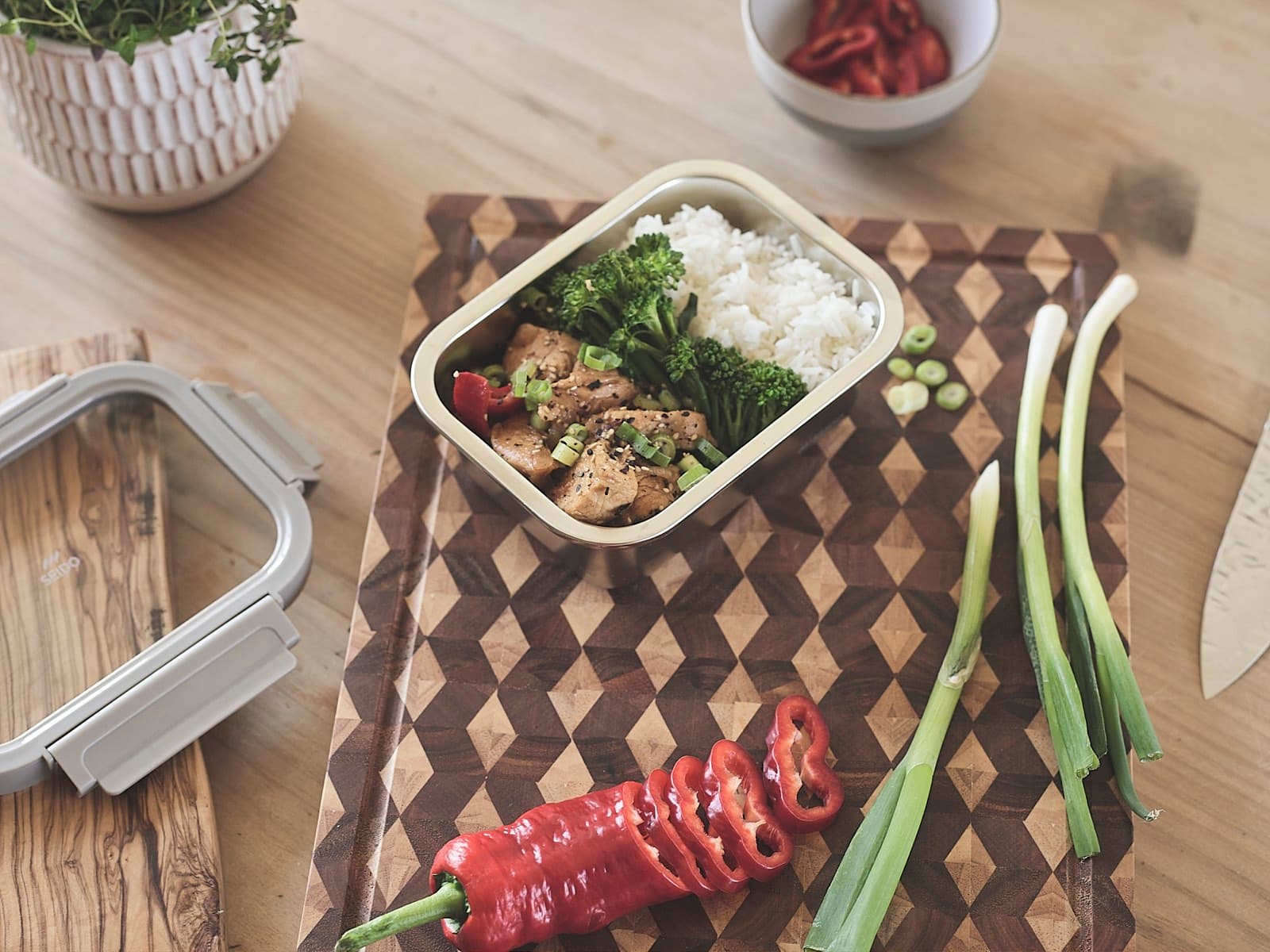
To reduce waste in the kitchen, replace each single-use item with something you wash and reuse, one habit at a time: containers with lids instead of cling film and sandwich bags, a refillable bottle instead of bottled drinks, your own cutlery instead of disposables, and a plan for leftovers so less food ends up in the bin.
Recycling catches less than many people assume: the OECD found that only 9% of plastic waste was recycled once losses during recycling were counted. That is why this guide starts with reuse rather than recycling, and with the packed lunch, whose daily bags, wrap and takeaway boxes make it the easiest place to begin.
Where does single-use plastic come from in a kitchen?
Before swapping anything, look at what actually goes in the bin over a week. In most kitchens the list is short and repetitive: cling film over bowls of leftovers, sandwich and freezer bags, takeaway containers that were meant to be reused and cracked instead, bottled drinks, and the plastic fork and straw that come with food bought on the go.
Each of those is a separate habit with a separate replacement. Treating them one at a time is easier than trying to redesign the whole kitchen, and it lets you keep what already works.
You don't need to replace everything at once. Start with the item you throw away most often, which for anyone who packs a weekday lunch is usually the sandwich bag or the takeaway box, and work outward from there.
What can you use instead of single-use plastic, item by item?
Here is a practical swap for each common single-use item. None of them requires special equipment, and several can come out of your kitchen drawers today.
- Sandwich and freezer bags: a stainless steel container, or several smaller containers for snacks. Reusable silicone bags also work for dry foods and wash easily.
- Cling film: a container with its own lid so nothing needs covering, a cloth napkin tied around a sandwich, or a beeswax-coated fabric wrap. For a bowl in the fridge, a plate on top works as a lid.
- Takeaway boxes: bring your own container for leftovers and, where the restaurant allows it, for food you order to take away.
- Disposable cutlery: a metal fork and spoon from your own cutlery drawer, rolled in a cloth napkin so they don't rattle in your bag.
- Straws: skip them, or carry a stainless steel straw with a small cleaning brush.
- Bottled drinks: a refillable stainless steel or glass bottle for water, and a lidded mug or insulated bottle for coffee.
- Small tubs for dressings and sauces: a small glass jar with a screw lid, packed upright in a separate pocket.
How much plastic packaging is actually recycled?
Recycling catches less plastic than many people assume. The OECD Global Plastics Outlook (2022) reports that plastic waste more than doubled, from 156 million tonnes in 2000 to 353 million tonnes in 2019. After accounting for losses during recycling, only 9% of plastic waste was recycled, while 19% was incinerated and almost 50% went to sanitary landfills. The OECD also found that packaging accounted for 40% of plastic waste in 2019.
At the level of one kitchen, the arithmetic is simple. A lunch that uses a single sandwich bag adds up to 250 bags a year if you pack a lunch five days a week for 50 weeks. A sandwich bag plus a snack bag doubles that to 500 on the same assumption. That is the number a reusable container or two, washed and packed again each day, can replace.
How do reusable containers help you waste less food?
Kitchen waste isn't only packaging. Leftovers forgotten at the back of the fridge end up in the bin too, and a few storage habits catch most of them. The time limits come from the Food Standards Agency (FSA): it advises cooling cooked food and getting it into the fridge or freezer within one to two hours, eating fridge leftovers within 48 hours, and freezing leftovers and home-made food as soon as possible if you won't eat them in time.
- Portion leftovers into individual containers once they have cooled, so each one is a ready meal rather than half a pan.
- Label each container with what's inside and the date, because you can't see through steel.
- Freeze anything you won't eat within 48 hours, and defrost it in the fridge the night before you need it.
- Rotate first in, first out: new containers at the back, older ones at the front.
- Plan the week's meals before you shop, and check what's already in the fridge and freezer.
Are stainless steel containers better than plastic?
For daily reuse, stainless steel has practical advantages. It resists absorbing the colour of tomato sauce or curry the way many plastic containers do, it resists holding on to odours from garlic or fish, and it doesn't turn cloudy or crack from repeated washing. A steel container that's cared for can stay in use for years, which is the point of choosing a reusable container in the first place.
It has trade-offs too, and they're worth knowing before you switch. Steel is heavier than thin plastic. You can't see inside an opaque steel box, so a glass lid helps. A steel container can dent if dropped. And whether it goes in a microwave depends on the specific product and its testing, so read the manufacturer's instructions rather than assuming.
Glass containers are the other common choice. Glass is see-through and handles reheating well, but it's heavier still and can break in a bag. Many people end up with a mix: steel for the daily commute, glass for meals that stay at home or in the office fridge.
How do you keep a packed lunch safe without single-use plastic?
Changing the container doesn't change the food-safety rules. The FSA's guidance for food taken out of the fridge, written for picnics, applies to a packed lunch too: after four hours or more at warm temperatures (8°C and above), the risk from bacteria increases and food may become unsafe to eat. In extremely hot weather, use food that has been out of the fridge within 2 hours.
Use an insulated bag with ice packs spread around the food, or a frozen water bottle, which doubles as a cold drink by lunchtime. Put the container in the office fridge when one is available. When reheating leftovers, heat them until they are steaming hot all the way through, and reheat them only once.
Pack wet and dry foods separately. Dressings, sauces and soups travel better in a small screw-top jar than in the main container, which keeps salads crisp and keeps liquid off everything else in the bag.
What happens to a reusable container at the end of its life?
Even a reusable container eventually wears out, so it's worth knowing where it goes next. Stainless steel is widely recyclable as scrap metal, and many household waste recycling centres accept it, but what councils take varies, so check yours before putting anything in a kerbside bin.
Lids are usually made of more than one material, and mixed-material parts are harder to recycle. Glass, silicone and polypropylene each follow different rules locally. The longer a container stays in use, the less this question matters, which is why care and durability count for more than the disposal route.
A reusable container option for weekday lunches
SEIDO lunch boxes are one option built for this kind of weekday packing. Each 3-pack holds three 800 ml (27 oz) stainless steel containers with glass lids. To be clear about materials: each lid has a polypropylene frame and a silicone gasket, so the set does contain plastic, but it replaces the sandwich bags, cling film and takeaway boxes a packed lunch would otherwise use. The container itself has been lab-tested in the microwave (lid off, up to 1000 W, never empty), in the freezer and in the dishwasher: dishwasher safe, hand wash recommended. Pack sauces and dressings in a separate jar rather than relying on the lid to hold liquid. Each set is backed by a 5-Year Limited Warranty (lid parts: 1 year). Buy now on Amazon.
Packing this way is what our lunch box 3-pack is built for.
Frequently asked questions
- What can I use instead of cling film?
- Use a container with its own lid so nothing needs covering, wrap a sandwich in a cloth napkin, or use a beeswax-coated fabric wrap for sandwiches and cut fruit and vegetables. For bowls in the fridge, a plate set on top works as a lid.
- Are silicone bags a good replacement for sandwich bags?
- For dry snacks and sandwiches, reusable silicone bags are a practical replacement: they wash out and can be used many times. They take longer to dry than a rigid container, and some foods leave a residue that needs a proper wash, so many people use them alongside a steel or glass container rather than instead of one.
- How much plastic waste is recycled?
- Less than many people assume. The OECD Global Plastics Outlook (2022) found that, after losses during recycling, only 9% of plastic waste was recycled, while almost 50% went to sanitary landfills, and that packaging made up 40% of plastic waste in 2019. Reuse avoids the question for the items a washable container replaces.
- Can I microwave a stainless steel lunch box?
- Only if the manufacturer has tested and approved that specific product for microwave use, and only as instructed. Many stainless steel containers are not approved for the microwave. The SEIDO lunch box container is microwave-safe by design with the lid off: it was lab-tested in a microwave of up to 1000 W and must never be heated empty.
- Is it worth replacing plastic containers I already own?
- Not necessarily. Using containers you already have for as long as they stay in good condition avoids waste too. Replace them when they crack, warp, stain badly or hold odours, and focus first on the items you throw away after every use, like bags, cling film and disposable cutlery.
Browse all stainless steel lunch boxes or keep reading: Can a Stainless Steel Lunch Box Go in the Oven? · Can You Freeze Food in Stainless Steel Containers? · Can You Microwave Stainless Steel?.
SEIDO Stainless Steel Lunch Box 3-Pack
See the lunch box 3-pack