Is Stainless Steel Better Than Non-Stick? It Depends What You Cook
Published 25 November 2025 · Updated 12 October 2026
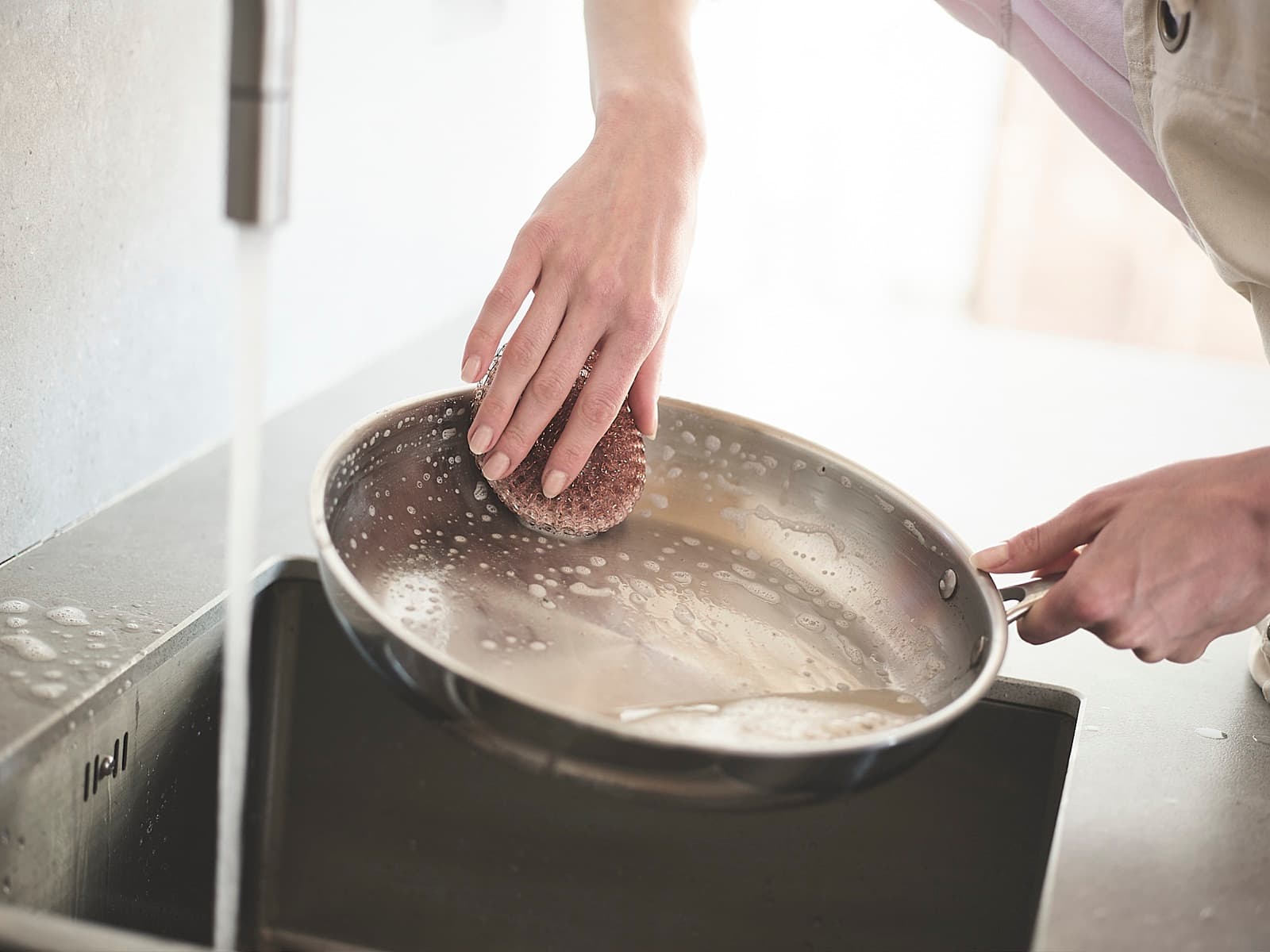
Stainless steel is better than non-stick for searing, browning and pan sauces, and for anyone who wants a cooking surface with no coating to wear out. Non-stick is better for delicate, low-fat cooking — eggs, crêpes and flaky fish — with no technique at all. The right pan depends on the dishes you cook most.
So this is not another side-by-side table. It is a decision guide: find the dishes you cook and the kind of cook you are, and the answer follows. If you cook a bit of everything, the honest answer for many kitchens is one of each.
What do you cook most nights?
Start with the last ten meals you actually cooked, not the ones you plan to cook. The pan that suits those dishes is the one to buy first.
- Steak, chops and chicken thighs: stainless steel. Browning comes from the Maillard reaction, which wants real surface heat, and bare steel can be preheated hard with no coating to protect.
- Anything finished with a pan sauce: stainless steel. Searing leaves fond — browned juices stuck lightly to the pan — and a splash of stock or wine turns it into a sauce. A non-stick coating is designed to stop fond forming.
- Fried eggs, scrambled eggs and omelettes: non-stick is the easy option. Stainless steel handles eggs too, once the preheat is right and there is enough butter or oil.
- Pancakes, crêpes and delicate white fish: non-stick releases them with almost no fat. A properly preheated stainless steel pan releases them too, with a little more practice.
- Stir-fries and sautéed vegetables: either pan works if it is hot and there is enough fat. Stainless steel browns harder; non-stick wants moderate heat to protect its coating.
- Dishes finished in the oven: stainless steel suits going from hob to oven, within the maker's oven guidance; a coated pan's own maker sets its limit.
Which kind of cook are you?
The same two pans suit different people. Find yourself below.
- You want breakfast eggs out fast with a whisper of butter and no thought: non-stick.
- You sear meat and make a sauce in the same pan: stainless steel.
- You are new to cooking and sticking puts you off: non-stick is forgiving on the first try, while stainless steel asks you to learn one habit, the preheat.
- You want a pan that cooks the same way year after year: uncoated stainless steel, because there is no coating whose release fades.
- You like to scrub a pan hard and use a metal spatula: stainless steel, which has no coating to scratch through.
What does each choice ask of you?
Non-stick asks for care. A non-stick coating is a synthetic release layer applied to a metal pan body, and that layer is what you are protecting: moderate heat, soft utensils, gentle washing. It cannot be renewed, so when the release fades, the pan is replaced.
Stainless steel asks for technique instead. There is no coating to protect, so you can preheat hard, scrub hard and use a metal spatula — but food releases only when the pan is hot enough, there is enough fat and you wait for a crust to form before turning it.
What is the one habit that makes stainless steel work?
Preheating. Most sticking on stainless steel is a temperature problem, not a pan problem.
- Heat the dry pan over a medium heat for a couple of minutes.
- Flick in a few drops of water. When they pull into beads that glide across the surface instead of sizzling away, the pan is ready.
- Tip out the water, add oil and let it shimmer, or add butter and let it foam.
- Add the food and leave it alone. Seared food clings while its crust forms, then lets go.
- For eggs, turn the heat down a notch after the water test: they want less heat than a sear.
Why do so many kitchens end up with one of each?
Because the two pans are good at different things, and keeping both lets each do only the job it does well. A small non-stick pan kept for eggs is only ever cooked at the gentle heat that job needs, which is how its coating is meant to be used. A stainless steel frying pan takes everything else: searing, sautéing, browning and pan sauces.
They also age differently. The non-stick pan is replaced when its coating wears; the stainless steel pan is scrubbed and used again.
Which SEIDO frying pan suits which cook?
If the stainless steel side of this guide sounds like your cooking, SEIDO makes uncoated stainless steel frying pans in three sizes. Each has a tri-ply clad body — a 304 (18/8) stainless steel cooking surface, an aluminium core and a 430 stainless steel exterior — and is made without intentionally added PFAS and without synthetic coatings. Each comes with a matching stainless steel lid, works on gas, electric, ceramic and induction hobs, and is backed by a 5-Year Limited Warranty.
- 20 cm (8 in): eggs, omelettes and single portions
- 24 cm (9.5 in): the everyday size, for two-portion meals
- 28 cm (11 in): family meals and batch cooking
Cooking this way is what our 24 cm frying pan is built for.
Frequently asked questions
- Is stainless steel or non-stick better for eggs?
- Non-stick is easier: eggs slide out with a little butter and no technique. Stainless steel cooks eggs well once you preheat the dry pan until a drop of water beads and glides, add enough butter or oil, turn the heat down a notch and let the eggs set before moving them. If eggs are most of what you cook, non-stick is the simpler choice.
- Which is better for a beginner, stainless steel or non-stick?
- Non-stick is more forgiving at first: it releases food without preheating discipline and wipes clean in seconds. Stainless steel asks you to learn one habit — preheat the dry pan, add fat, then leave the food until it releases — and in return gives you a surface with no coating to protect. Many beginners keep non-stick for eggs and learn on stainless steel for everything else.
- Can you sear a steak in a non-stick pan?
- You can brown a steak in a non-stick pan, but a deep crust needs a very hot pan, and non-stick makers advise moderate heat to protect the coating. Bare stainless steel can be preheated hard with no coating to protect, and it leaves fond behind for a pan sauce, which makes it the stronger choice for searing.
- Is stainless steel harder to clean than non-stick?
- It takes a little more effort, but has fewer rules. Non-stick wipes clean with a soft sponge and must be treated gently to protect the coating. Stainless steel may need a short soak in warm water for stuck-on food, but you can scrub it firmly, and a paste of bicarbonate of soda and water lifts browned residue.
- If I only buy one frying pan, which should it be?
- If you cook a bit of everything, an uncoated stainless steel frying pan covers the widest range: searing, sautéing, pan sauces and, with technique, eggs. A 24 cm (9.5 in) pan is a practical everyday size for one or two people. If you mainly cook eggs and delicate fish at a gentle heat, a non-stick pan is the simpler single choice.
Browse all stainless steel frying pans or keep reading: Can You Cook Acidic Foods in Stainless Steel? · Can You Put a Stainless Steel Pan in the Oven? · How Hot Should a Stainless Steel Pan Be?.
SEIDO 24 cm Stainless Steel Frying Pan
See the 24 cm frying pan